
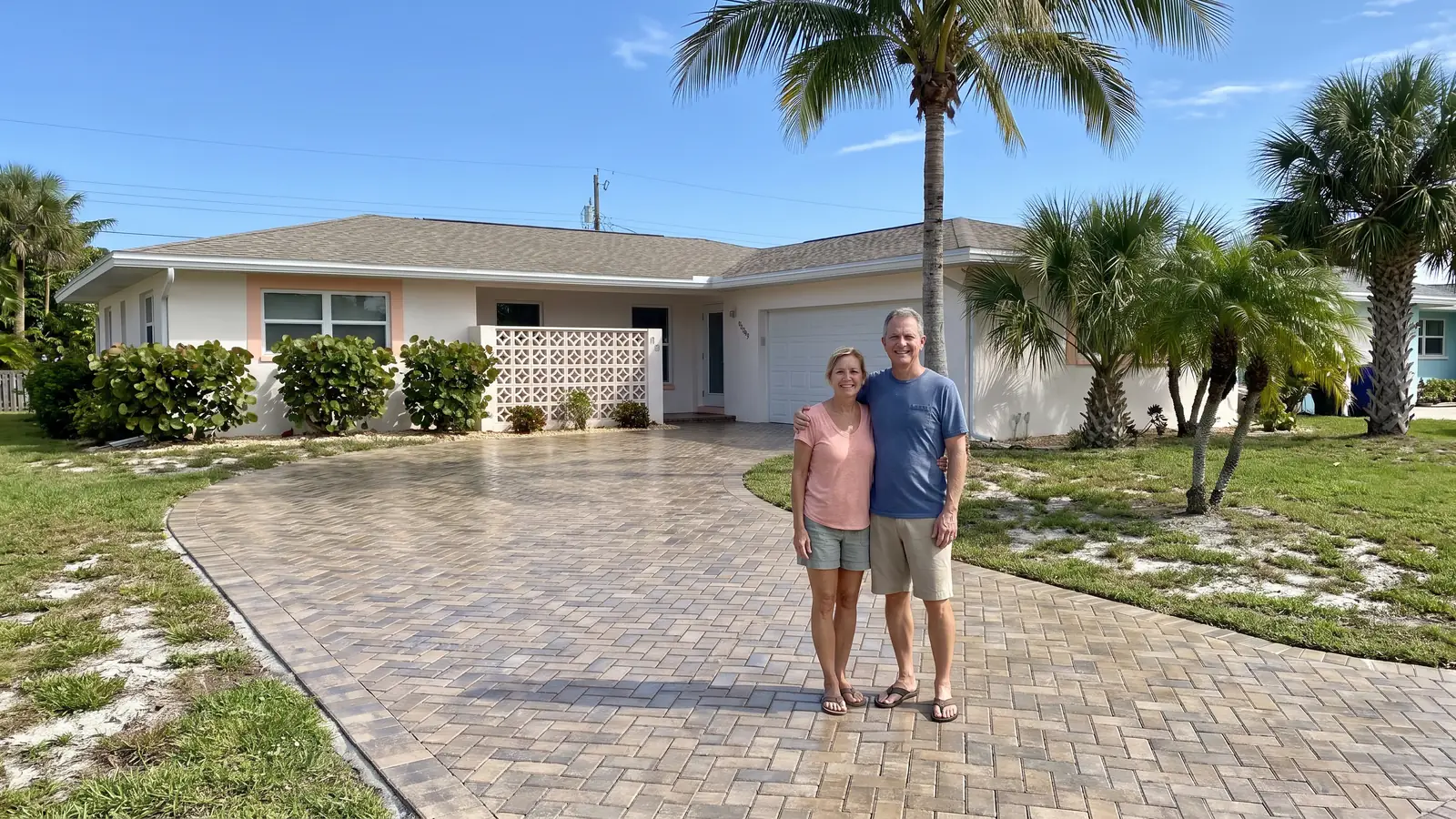
Rust, oil and leaf stains lifted from pavers
Paver Stain Removal in Satellite Beach, FL
Call (321) 455-5098 for a free estimate on rust, oil or leaf stains on pavers in Satellite Beach.
- Brings out deeper paver color
- Fresh joint sand helps lock pavers in place
- Gives weeds less room to grow
- Makes the surface easier to keep clean
- Free estimate, no obligation
Request a Free Estimate
Free, no obligation.
Who removes stains from pavers in Satellite Beach, and how soon do they reply?
A local contractor can lift rust, oil, tar and leaf stains from pavers across Satellite Beach, FL, and you will hear back within 1 business day, usually much sooner. The estimate is free, and you can say no afterward. To start, call (321) 455-5098.
Dirt sits on top of a paver, but a stain has soaked in. It has soaked into the surface, so a quick rinse may leave a ghost of it behind or spread it wider. The fix depends on what made the mark, so the first step is naming it. A contractor identifies the stain, tries the treatment on a small spot and then works the whole mark. Point to the one that annoys you most when you ask for a free estimate.
What kind of stain do I have on my pavers?
The cause decides the treatment, so look at color and shape first. The cards below match common stains to where they come from. Not sure? Call (321) 455-5098 and describe it.
Orange or rust streaks
Cambridge Pavingstones says to find the source first: sprinklers, patio furniture and fertilizer are the usual ones. Treat the stain without fixing the source and it comes back.
Dark oil and car fluids
Oil, brake fluid and antifreeze soak in. Surface oil lifts with a degreaser, and a deeper stain needs a poultice left to dry on it.
Brown leaf and mulch marks
Tannin from leaves and mulch leaves a tea-colored blotch. Cambridge says these return every year if the tree stays.
Black tar and tire marks
Asphalt, roofing tar and skid marks need a remover made for them. 757 Brick lists a tar remover for this, and says a badly marked paver is sometimes easier to swap.
White film or powder
Often efflorescence, a salt deposit, rather than a true stain. It is treated with a remover made for it, or it fades on its own over months.
Green or black film
Mold and mildew grow where moisture and constant shade meet. It is a growth, not a stain, and it comes off with a wash and a treatment.
How do you get an oil stain out of pavers?
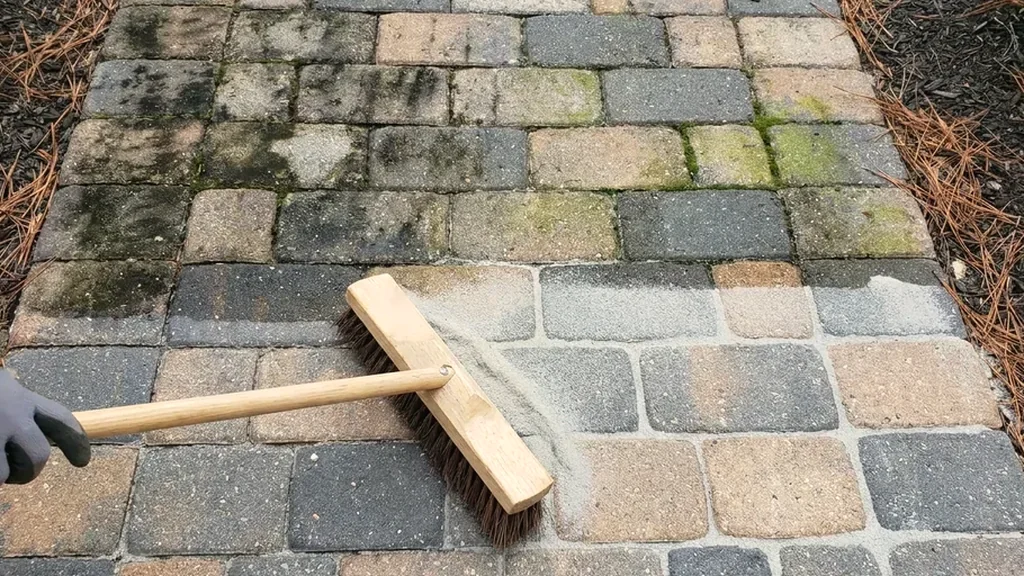
Surface oil and embedded oil are two different jobs. Prosoco says a degreaser takes oil off the top and shows what went deeper. For the deeper stain, a poultice goes on once the pavers are dry, then sits 5 to 8 hours until it dries and cracks. Once the crack network is complete, it is dry, and it gets swept up. Most stains come out in one pass, and severe ones may take two. To ask how it would go on yours, call (321) 455-5098.
Cambridge Pavingstones gives a similar time for its oil remover: 6 to 8 hours, until it dries to a powder. Spills from antifreeze, brake fluid and hydraulic oil are treated the same way. A drip that sits for weeks goes deeper than a fresh spill. For a driveway with an old drip under the car, ask for a free estimate.
Can rust from a sprinkler be taken off pavers?
Usually, but the source decides whether it stays gone. Rust streaks that fan out from one spot are often from irrigation water or a metal item resting on the stone. Cambridge Pavingstones says to find the source, then apply a rust remover, and notes that several applications may be needed. A contractor can point out where the water is hitting before the pavers are treated. To have a look, call (321) 455-5098.
One catch matters on sealed pavers. Cambridge and 757 Brick both warn that rust remover can damage sealer. That is why a small test spot comes first, and why a sealed surface may need a fresh coat over the treated area. Ask who handles the touch-up when you ask for a free estimate.
Will treating a stain damage my sealer or my paver color?
It can, which is why a test spot comes first. Cambridge Pavingstones tells owners to try a cleaner on one or two pavers before treating a large area. Rust remover, bleach for leaf stains and strong strippers all act differently on sealed and bare surfaces. A contractor tests, waits for the result and only then treats the whole mark. If a quote skips the test, ask why when you ask for a free estimate.
Pressure is the other risk. Prosoco's degreaser calls for 400 to 1,000 psi with plenty of water when a washer is used, and a wide nozzle held at an angle is the advice on 757 Brick. Hard blasting at close range chips pavers and empties the joints. Ask what pressure and nozzle are planned when you call (321) 455-5098.
Why do stains show up so quickly on Satellite Beach pavers?
Moisture is part of it. Satellite Beach gets 34.2 inches of rain a year and has 7.7 miles of shoreline, counting ocean, river and canals, so pavers stay damp and pick up tannin, algae and rust fast. August highs average 88 degrees. A driveway under a palm or a patio beside a sprinkler head is stained sooner than one in open sun. To see what yours is picking up, call (321) 455-5098.
Salt plays a part as well. A white film that looks like a stain may be a salt deposit rising from the pavers, and Unilock says it usually clears in two to three months on new ones. Bare pavers take in whatever lands on them. Sealing after the stain is gone can slow the next one, and you can ask for a free estimate to ask about that.
What stains show up around a pool deck or lanai?
Pools bring their own marks. Outercle lists sunscreen, body oils, chlorine, food spills and debris on a pool deck, and says untreated stone may grow algae in damp areas. Reddish stains can come from metal chairs or a tool left on the surface. Bring up what sits on your deck when you call (321) 455-5098.
Outercle says oily spills on stone should be blotted rather than scrubbed in. If the deck is natural stone such as travertine, the rules change again: acids and bleach can harm it, so a stone-safe treatment is the one to ask for. The travertine sealing page explains how that works. To start with your deck, ask for a free estimate.
Should I seal pavers after the stains come out?
A sealer will not stop a stain from happening, but it slows it from soaking in, and cleanups are easier. Unilock, a paver manufacturer, lists easier cleaning and deeper color as the gains and a fresh coat every three to five years as the cost. A stain sealed over stays under the film, so the treatment has to finish first. Ask for the order of work when you ask for a free estimate.
If the stain removal strips part of the old coat, that patch is resealed to match the rest. A mismatched square on a driveway looks worse than the stain did. The paver restoration page covers when the whole surface should be done instead. For a plan that fits, call (321) 455-5098.
Does a white film count as a stain?
Not exactly. Efflorescence is a natural salt deposit, and Unilock says it usually fades in two to three months on new pavers, with some cases taking up to a year. Cambridge Pavingstones lists a diluted efflorescence remover for it. Cloudy old sealer looks similar, and the treatments differ, so a contractor should look at the spot first. To have it checked, call (321) 455-5098.
What does paver stain removal cost in Satellite Beach?
A few stained pavers cost less than a full field, and a full field with deep oil costs more than a quick wash. The table below applies the published Brevard County range for the full clean, sand and seal and leaves spot treatment unpriced. To get a number for your stain, ask for a free estimate.
Wondering how the wash alone compares? The paver cleaning page has the details, and the paver sealing page explains the full job. Call (321) 455-5098 to talk it through.
| Job | Area | Published rate per sq ft | Clean, sand and seal |
|---|---|---|---|
| Patio or walkway | 300 sq ft | $1.85 to $4.00 | $555 to $1,200 |
| Two car driveway | 600 sq ft | $1.85 to $4.00 | $1,110 to $2,400 |
| Pool deck | 1,000 sq ft | $1.85 to $4.00 | $1,850 to $4,000 |
| Spot treatment of oil, rust or tar | A few pavers | Priced on site | Priced on site |
No page I opened lists a Brevard rate for stain removal itself. A Brevard County paver company lists $1.85 to $4.00 per square foot to clean, sand and seal. A stain on a few pavers is a different kind of job from a wash, so it is priced after the contractor sees how deep it went.
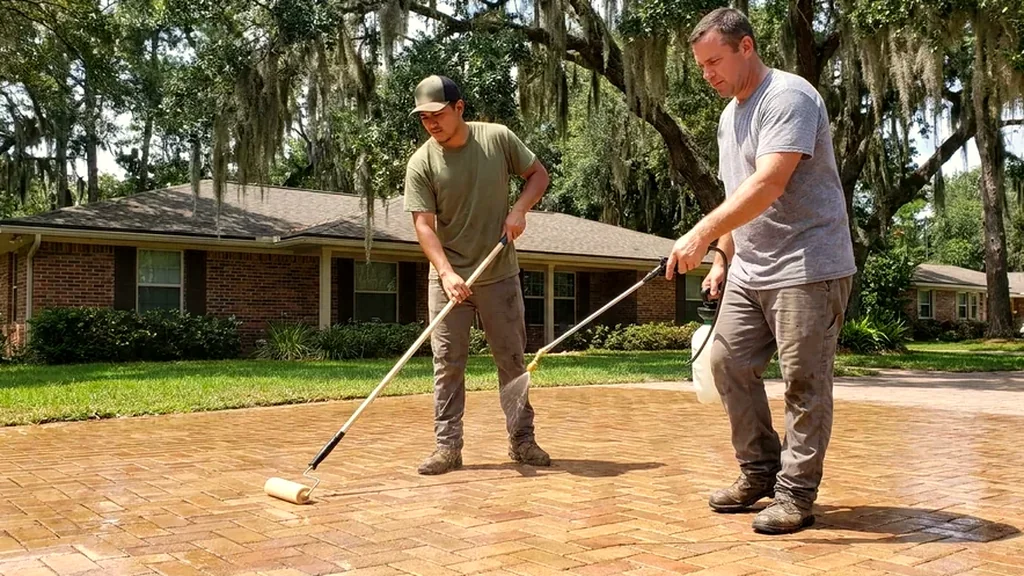
What is the paver stain removal process from first look to rinse?
Most visits follow the same order, and the dwell time is what takes the longest. To pick a day, call (321) 455-5098.
1. Identify the mark
The contractor looks at color, shape and location, asks what happened there and checks the sealer.
2. Test a small spot
A treatment goes on one paver first, then the contractor checks how the sealer and color react.
3. Treat and wait
Oil poultices dry 5 to 8 hours per Prosoco. Rust and tar removers have their own timing, and some marks need a second pass.
4. Rinse and recheck
A low-pressure rinse clears residue, and the mark is checked in daylight once the paver dries.
5. Reseal if needed
A treated patch that lost its coat gets sealer to match, or the whole surface is done if you want it even.
Which Brevard County towns get paver stain removal estimates?
A local contractor serves Satellite Beach and the towns below. Pick yours, or call (321) 455-5098 about a street not on the list.
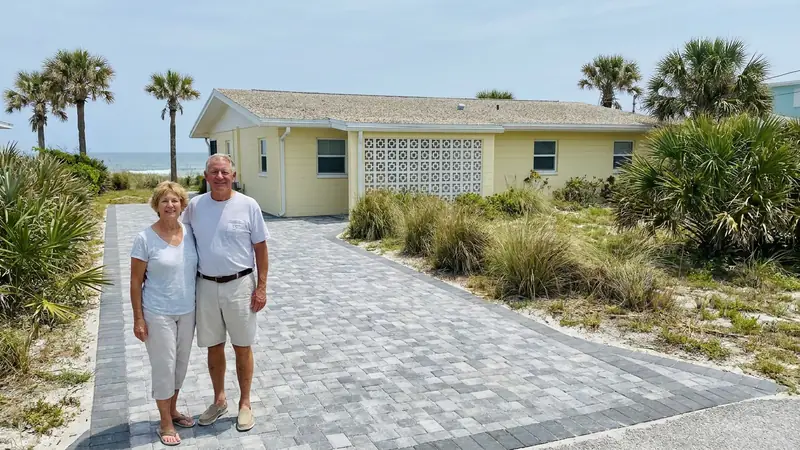
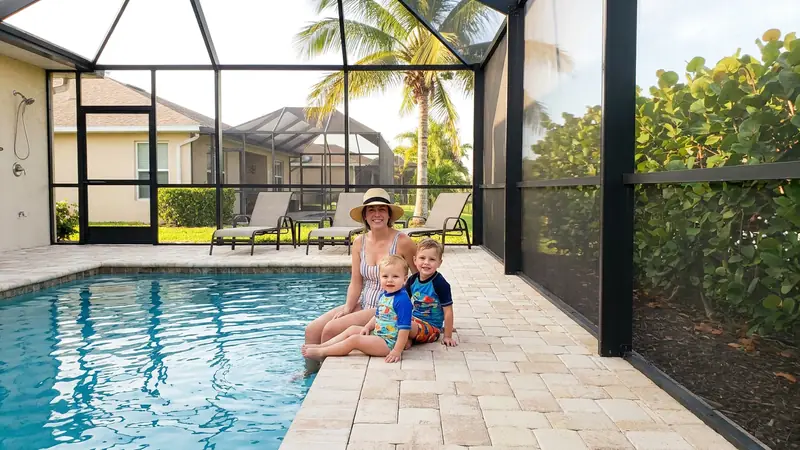
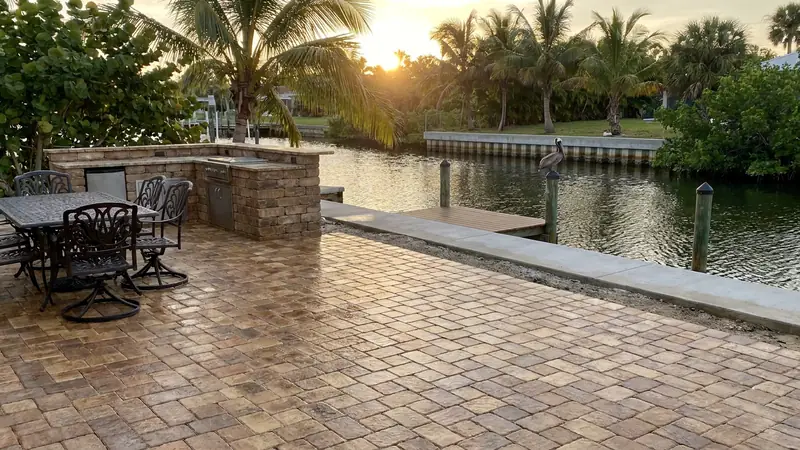
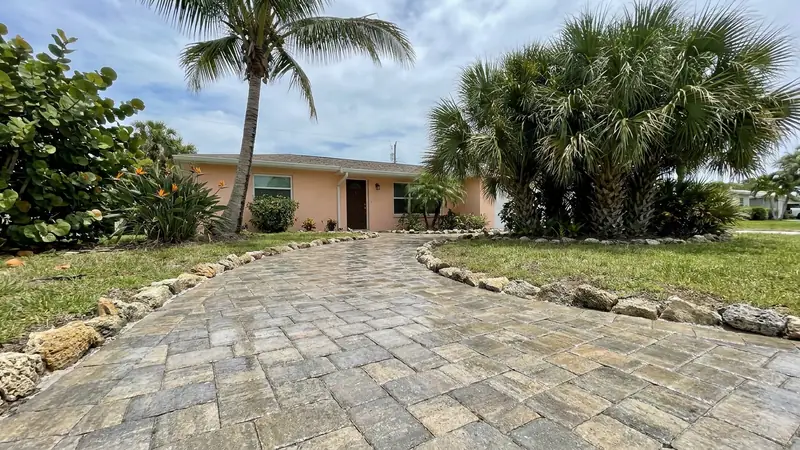
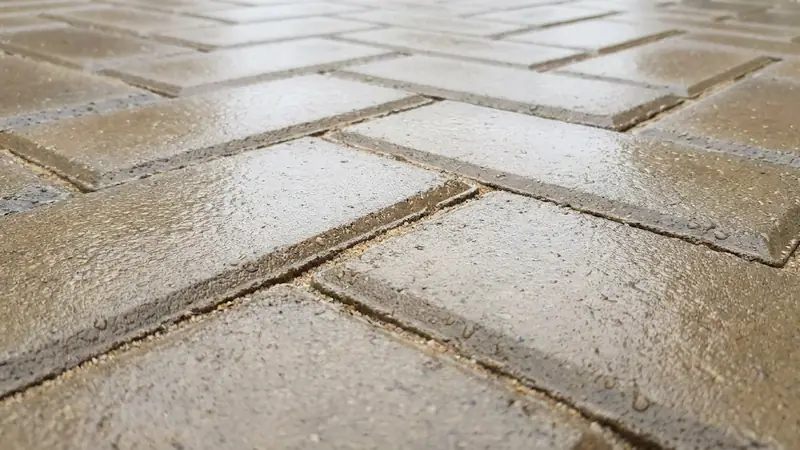
What do pavers look like after a stain is gone in Satellite Beach?
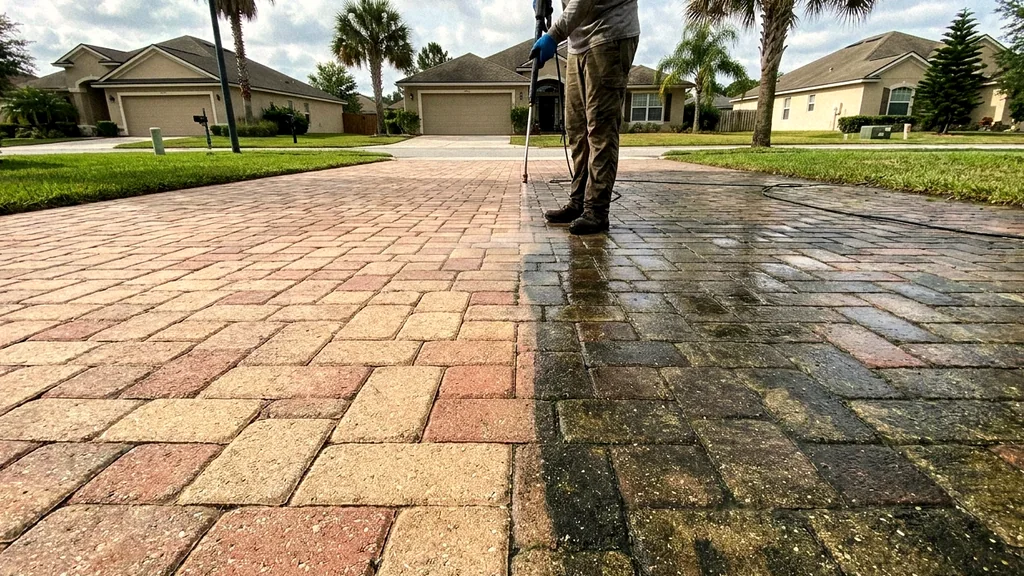
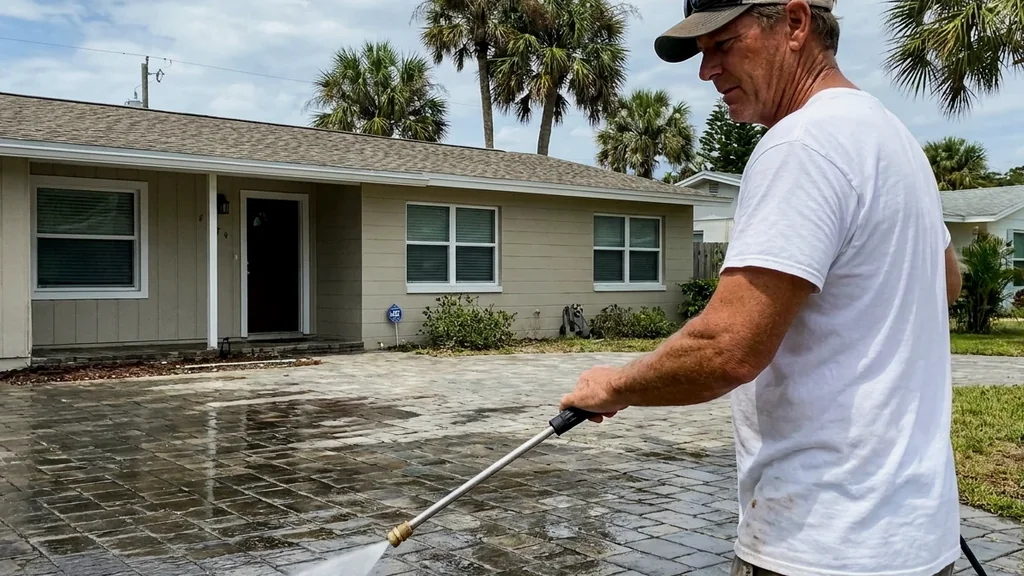
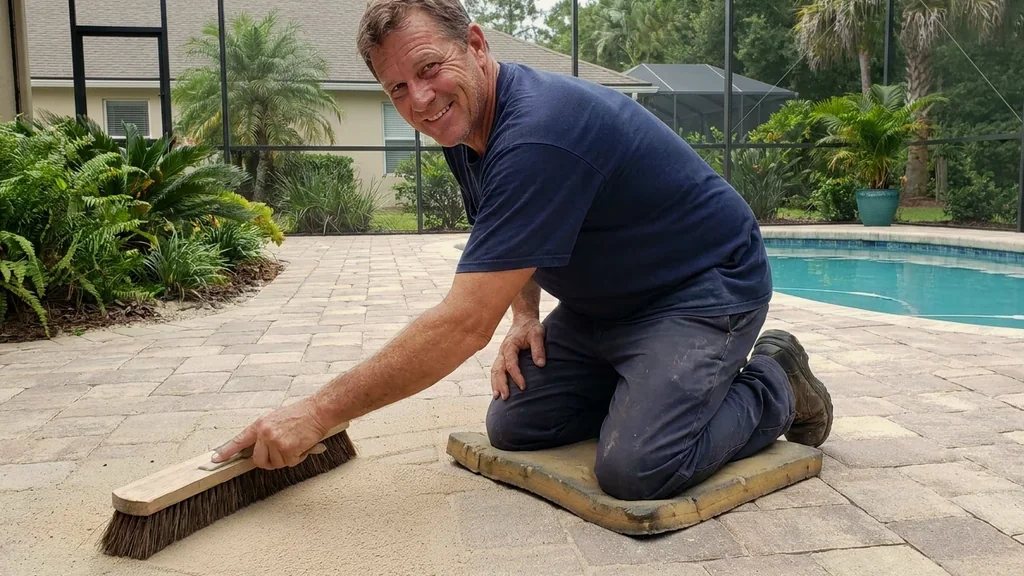
Frequently Asked Questions
What takes oil stains out of brick pavers?
A contractor starts by lifting surface oil with a degreaser, which also shows how deep the stain went. Prosoco, a masonry cleaner maker, says deeper stains need a poultice that dries on the stain and pulls oil out, and the pavers must be dry first. Most come out in one application, and severe ones may take more.
How much does it cost to seal pavers in Florida?
A Brevard County paver company publishes $1.85 to $4.00 per square foot to clean, sand and seal. Stain work is quoted on top of that or on its own, since a few stained pavers cost less than a full field.
Is sealing your pavers worth it after a stain is gone?
Often yes, because a sealer slows the next stain from soaking in. Unilock, a paver manufacturer, lists easier cleaning among the gains and a fresh coat every three to five years as the cost. It does not make pavers stain-proof.
Can rust from a sprinkler be removed from pavers?
Usually, yes. Cambridge Pavingstones says to find the source first, whether sprinklers, patio furniture or fertilizer, then treat with a rust remover and expect more than one pass. Both Cambridge and 757 Brick warn that rust remover can damage sealer, so the order of work matters.
Will stain removal take the sealer off my pavers?
It can. Some stain treatments are hard on a sealed surface, which is why a contractor tests a small spot before treating the whole stain. If the coat gets damaged, that area is resealed to match.
How long does an oil stain treatment take to work?
Prosoco says its poultice takes 5 to 8 hours to dry, and some users leave it overnight. Cambridge Pavingstones gives 6 to 8 hours until the cleaner dries to a powder. Cracks in the dried poultice mean it has finished.
Why do my pavers in Satellite Beach have dark leaf stains?
Leaves leave tannin behind, and Cambridge Pavingstones says the stains return each year unless the source changes. Palms, sea grape and other trees near a driveway can drop what stains stone after a wet week. A cleaning and a coat of sealer help, but the tree is still there.
Is the white film on my pavers a stain?
Often it is efflorescence, a salt deposit that rises through cement-based pavers. Unilock says it usually fades in two to three months on new pavers and can take up to a year. A contractor tells it apart from cloudy sealer before choosing a treatment.
How soon can someone look at my stained pavers in Satellite Beach?
A local contractor replies within 1 business day, usually much sooner, after you call (321) 455-5098 or send the short form. The look is free, and the price is yours to take or leave.
Have a stain you cannot get out?
Fill in the short form or phone the number below. A contractor replies within 1 business day, usually sooner.
Free, no obligation