
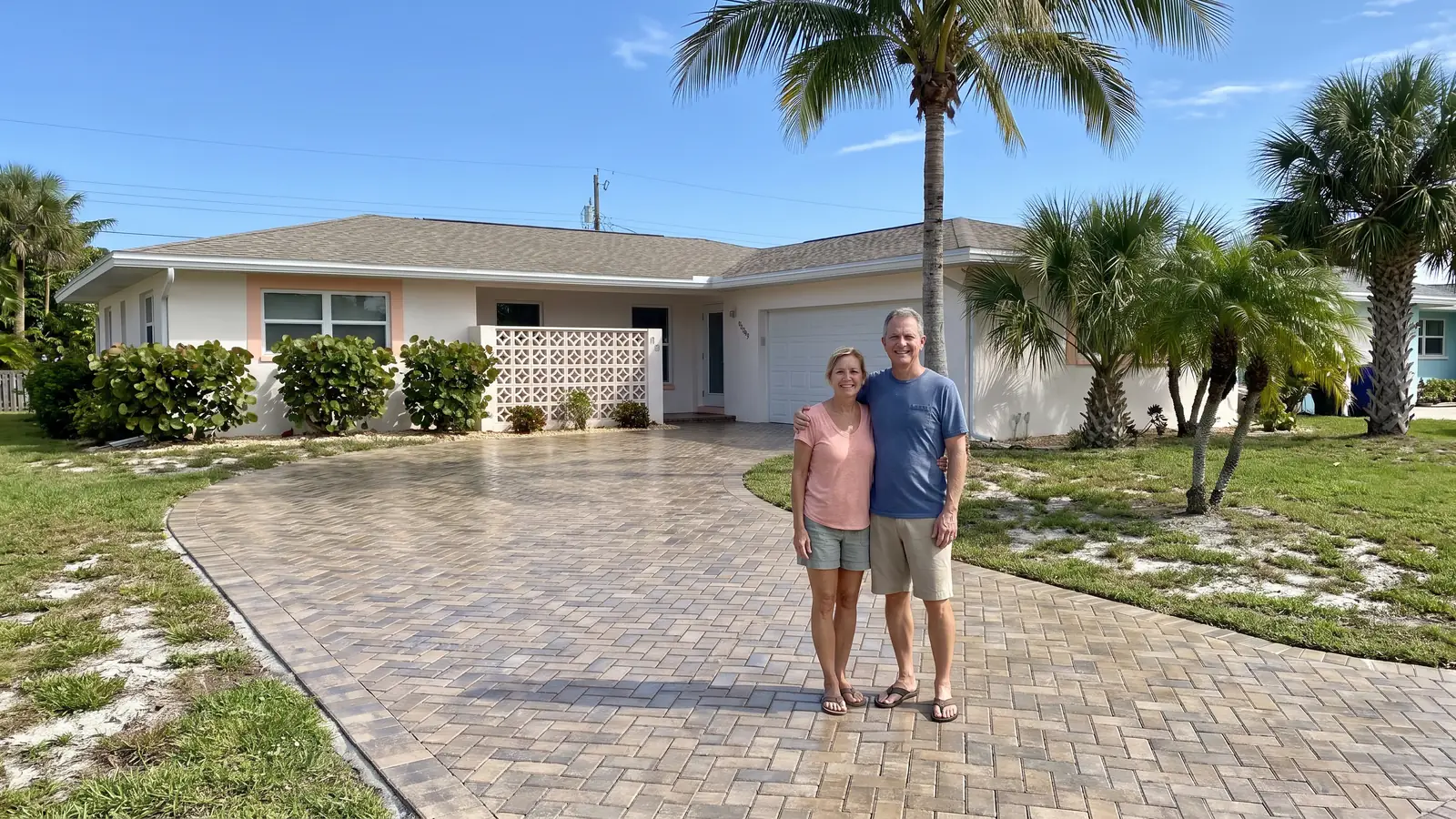
Paver sealing for Port St. John homes
Paver Sealing in Port St. John, FL
Port St John pavers near Fay Lake can look fresh again, so call (321) 455-5098 for a free estimate.
- Brings out deeper paver color
- Fresh joint sand helps lock pavers in place
- Gives weeds less room to grow
- Makes the surface easier to keep clean
- Free estimate, no obligation
Request a Free Estimate
Free, no obligation.
Fast, careful paver sealing in Port St. John
Paver sealing in Port St John comes with a free estimate for driveways, walkways, patios and porches. The contractor washes, re-sands and seals pavers on the streets of Port St. John between US 1 and I-95. Reach out through ask for a free estimate, and a reply comes within 1 business day, usually much sooner.
Look at a driveway beside a screened porch: pavers stained brown and gray, weeds along the edge. A wash, fresh sand and a new coat return them to one even color. If you would like to talk first, call (321) 455-5098 and say what you see. The estimate is free.
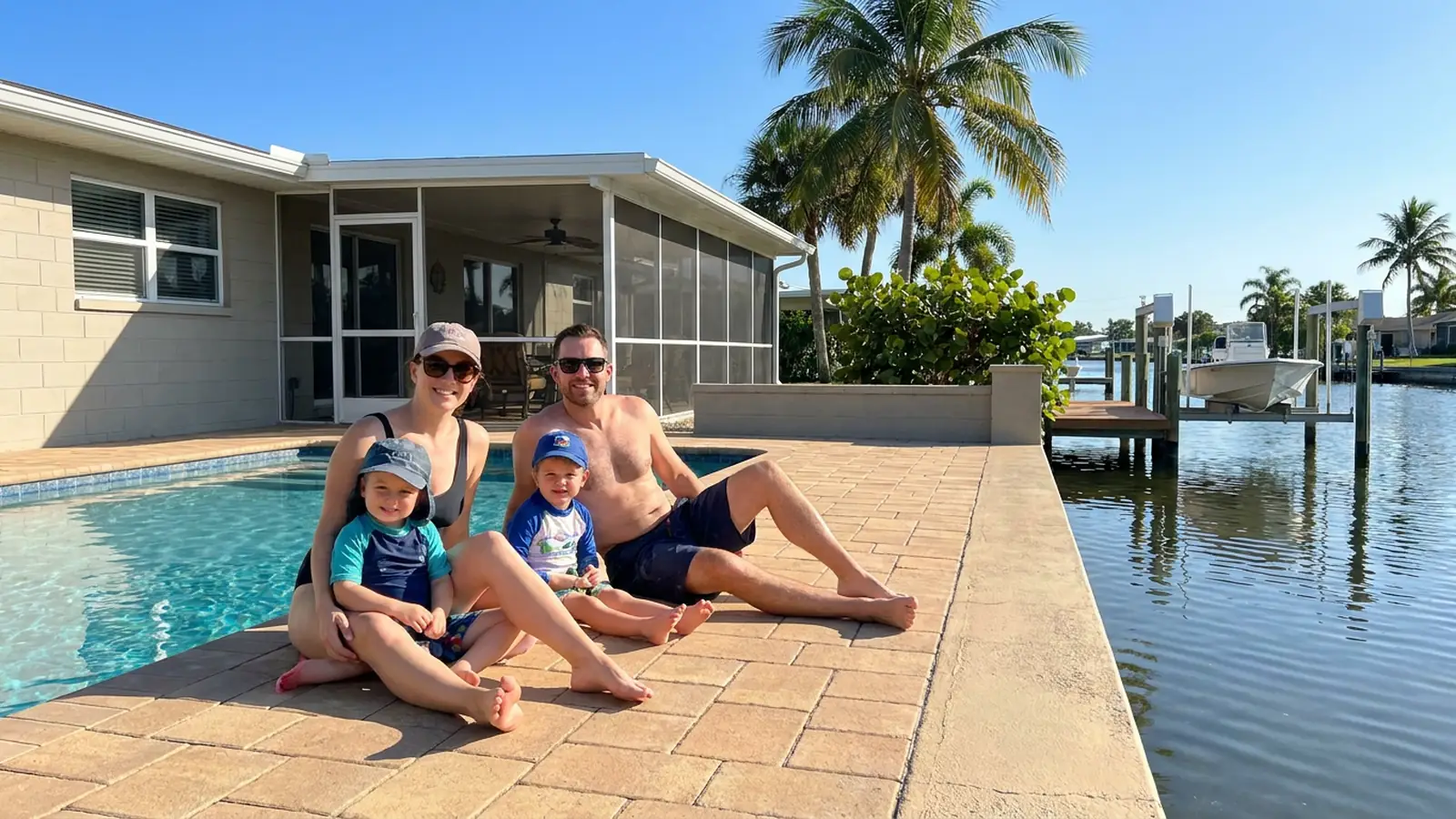
Why hire a local paver sealing contractor in Port St. John?
Many Port St John streets have no mandatory homeowners association, so choices about your pavers are yours to make. To hear how a local contractor would handle yours, ask for a free estimate.
Free look first
A contractor visits your Port St John pavers, measures, and quotes. Nothing is agreed until you say yes.
A range to check
Local price lists show $1.85 to $4.00 per square foot. Set any Port St John bid beside that.
Your lot, your call
With no association on many streets, you pick the finish. Matte looks natural beside a frame home, and a wet look shows scuffs sooner.
No strings
Date, finish and whether to proceed are all your decisions. A Port St John estimate carries no obligation.
Get Your Free Estimate in Port St. John
Tell us about your pavers in Port St. John.
Free, no obligation
What paver problems show up most in Port St. John?
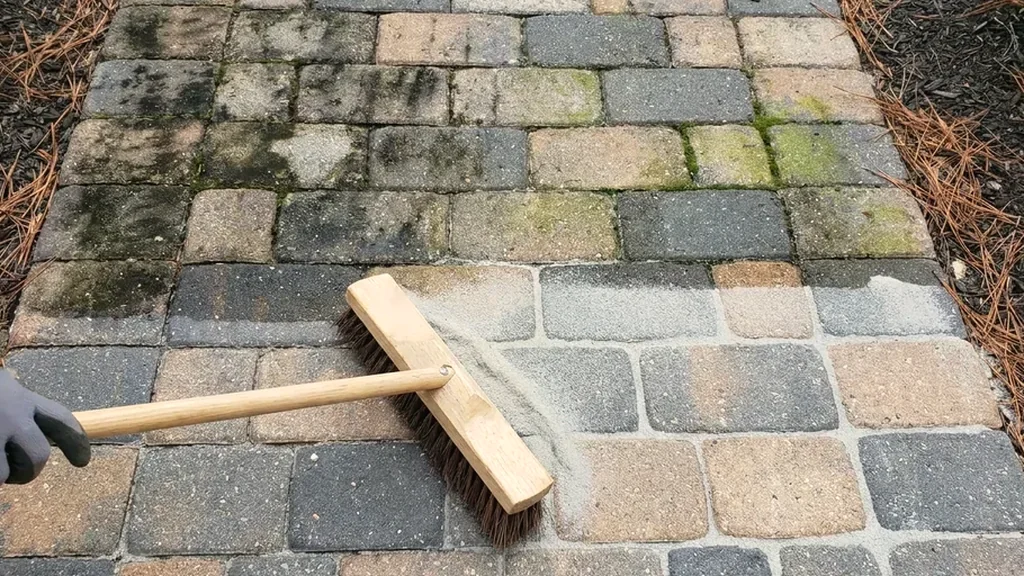
Green film under covered patios
A local guide describes many Port St John homes as single-story frame houses with covered patios and mature landscaping. Cover and trees mean shade. Pavers that stay shaded and damp pick up moss and algae, and treatment helps little where they never dry out. Expect the green on the covered side of the house, then along the walk. A porch roof keeps rain off, but it also keeps the afternoon sun from drying the surface. Frame homes with covered patios often have paving on more than one side of the house. Mature landscaping drops leaves onto the pavers, and a layer of leaves holds water against the surface.
Rust lines from lawn sprinklers
Suburban lots here run a quarter acre to half an acre, so there is a lot of lawn to water. UF/IFAS says most Florida well water carries a lot of iron, and spraying it can leave orange streaks. Streaks near the edge of the drive point to a sprinkler head that reaches it. Rust is cleaned off before the coat, because sealer would lock it in place. A lawn this size usually has several sprinkler zones, and any one of them may reach the drive. Turning the heads is worth a word with whoever runs your irrigation.
Pavers laid in stages
Owners on streets without an association can usually add RV pads, outbuildings and guest cottages. That freedom can mean pavers were laid in more than one season, by more than one owner. Older and newer sections may then have different sand, different wear and different coats. The contractor checks each section before choosing a plan. It also helps to tell the contractor which parts were laid first, since they have had the longest to wear. Matching the finish across sections is easier when the whole area is sealed in one visit. A newer section and an older one will not look alike. Ask the contractor to walk each section with you, so the plan covers old and new alike. Pavers beside an RV pad often carry heavy loads, so their joints and edges are worth a closer look.
Sand lost to the wet season
Melbourne-area rain records show a wet season of about 138 days that brings nearly two thirds of the year's rain. Strong storms shift joint sand, and widening joints let weeds in. On a driveway that has gone years without a coat, sand loss tends to show first along the edges. The sand returns to the joints ahead of the sealer. Checking the edges every spring shows what is missing before weeds find it. Sealed joints with fresh sand hold up better through a long wet summer.
Old sealer of unknown type
Many homes here date from the 1970s to the 1990s, so most have been sold at least once. A past owner may have sealed the pavers with something that was never written down. It matters, since water-based sealer will not go over solvent-based sealer. A surface that peels or looks patchy tells you the old product needs attention first. If you bought the house with the pavers already down, ask the former owner what went on them. When nobody knows, the contractor can test a small spot.
Does my Port St John street have an HOA that cares about pavers?
Does your street have an HOA?
Probably not, because most Port St John homes sit outside any mandatory association. One local guide says the 1970s core has no required HOA, while Cypress Woods and Hundred Acre Woods do. Owners outside an association can usually add things like RV pads and guest cottages, so pavers there may be laid in stages. Tell the contractor which kind of street you are on when you ask for a free estimate.
What do Cypress Woods and Hundred Acre Woods require?
Cypress Woods dates to the 1980s and 1990s, with HOA-managed common areas and enforced architectural standards, the same guide says. Hundred Acre Woods also has an HOA. If your street is in one of them, ask the association about paver finish before you book. Call (321) 455-5098 once you know, and mention what you learned.
Which older communities share the map?
Port St John shares the map with older communities such as Delespine, Williams Point, Frontenac and Sharpes. A 2002 plan to bring them into one city failed, with voters turning it down 73 percent to 27 percent. Those names still point to separate parts of the area. Say which one is yours when you ask for a free estimate.
What does paver sealing cost in Port St. John?
How does the Brevard range apply here?
Local Brevard price lists run $1.85 to $4.00 per square foot to clean, sand and seal. Area sets the total first, and a quarter-acre to half-acre lot can hold a long drive and a wide walk. Condition then nudges the rate up or down. To put a figure on your pavers, ask for a free estimate; the estimate is free.
What else moves the quote?
Extras add up. An RV pad, a guest-cottage walk or a second patio counts if it is paved. Old sealer, rust and thin joint sand change the price as well. Phone (321) 455-5098 and the contractor can talk through what applies at your address.
| Paved area | Typical example | Clean, sand and seal |
|---|---|---|
| 300 sq ft | Small patio or walkway | $555 to $1,200 |
| 600 sq ft | Two car driveway | $1,110 to $2,400 |
| 1,000 sq ft | Large driveway or pool deck | $1,850 to $4,000 |
| 1,500 sq ft | Driveway plus pool deck | $2,775 to $6,000 |
Math based on the $1.85 to $4.00 per square foot that Space Coast paver companies publish. Your contractor sets the actual price after seeing the surface. Repairs, leveling and stripping failed sealer are usually extra.
How does a paver sealing job work in Port St. John?
Walk every paved area
The contractor walks the drive, the walks and any porch or patio, and notes where water collects. Sunken or raised spots get fixed before sealing, because the coat keeps whatever shape it covers. If the surface has a coat already, the type matters, since water-based sealer cannot sit on solvent-based sealer. Tell the contractor about any work you know of. The walk also fixes the square footage, the figure that a per-foot price multiplies. Longer distances between paved areas also mean the contractor moves hoses and equipment more than once. On a half-acre lot this walk can cover a long distance, so the contractor allows time for it.
Clean and treat stains
One Brevard company opens a job with a pretreat, a surface clean and rinse, and an efflorescence treatment. That work clears the green film under Port St John patio roofs and the rust from lawn sprinklers. The same company says sealed pavers should be washed at 1500 PSI or less, since high pressure can blow out joint sand. White efflorescence can cloud a paver surface, so this step is not rushed before sealing. Rinse water is kept clear of porch screens and landscaping as far as the layout allows. Landscaping beds and screened porches near the pavers are rinsed around with care.
Fill the joints
Because washing strips joint sand, fresh sand is added before sealing. Open joints take in soil and give weeds a foothold. If the sand has sat low for years, plan on a longer step. Refilled joints help hold the surface together, since missing sand lets them widen and soil settle in. The edges beside RV pads and garage aprons are worth a second look. Sand is swept in and packed down so it stays put once the first rain arrives. On a long drive this step can take a good share of the day.
Let it dry out
Pavers have to be dry before a coat goes on. Roughly two thirds of a year's rain falls across a wet season of about 138 days, per the National Weather Service, so the forecast comes first. Pavers under a covered patio can stay damp longest, and a roof shades the surface, so that spot is checked last. A dry-looking surface can still hold water down in the joints. One Brevard company calls September through May the easier season, with less humidity and rain.
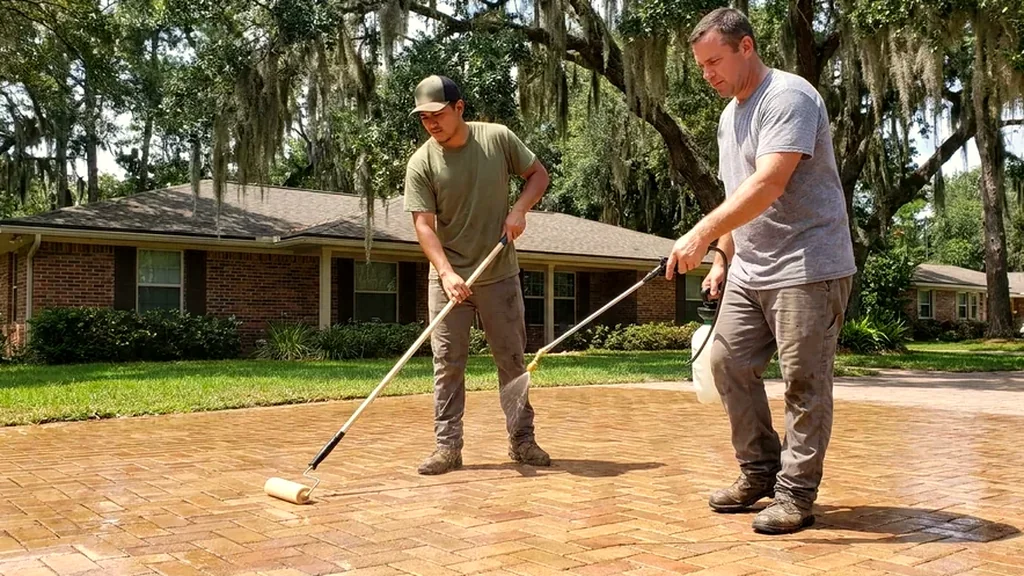
Seal in your finish
The sealer goes on in two coats, in the finish you chose. Gloss shows tire marks sooner than a matte coat does. Plan the next coat for somewhere between year two and year five, as local quotes suggest. Keep cars parked elsewhere for the 72 hours one Brevard company asks for, and confirm the wait for your product. Porches and patios get the same coats as the drive. Screens and furniture near the porch pavers get covered or moved first.
Complete paver services in Port St. John
How does a job run from first look to seal?
A Port St John job starts with a walk around the drive, the walks and the porch. Then comes the wash, a stain treatment and fresh joint sand. Once the pavers are dry, the sealer goes on. Call (321) 455-5098 and ask how long each step runs at your address.
Which surfaces get sealed?
Tires and full sun hit the driveway hardest. A walk along the house, or a patio under a roof, stays damp and turns green first. Porch pavers carry furniture and feet. Because each spot ages its own way, tell the contractor about all of them when you ask for a free estimate.
Which sealer and which finish?
Pick the sealer in two steps. What is already on the pavers decides water-based or solvent-based, since the two will not bond. Then you choose matte or a wet look, and a frame home with a covered patio usually suits matte. Call (321) 455-5098 for a second opinion on the finish.
How does rain set the date?
Rain here comes in a wet season of about 138 days, so a sealing day can move. Roofed patios hold water longer than an open driveway does. A careful contractor waits for dry pavers. Use ask for a free estimate to pick a date that works around the weather.
Questions to ask before you hire
- How quickly can I get on your schedule once I send the estimate request?
- Do you protect my screen enclosure and garage door from overspray?
- Does the quote say if the joint sand gets replaced, and with what kind?
- What happens if an afternoon storm rolls in right after you seal?
- Will you cover my plants and shrubs before you spray?
- How many days do I stay off the pavers, and when can the cars come back?
- Does your sealer hold up to salt air and sprinkler water near the coast?
What do sealed pavers look like around Port St. John?
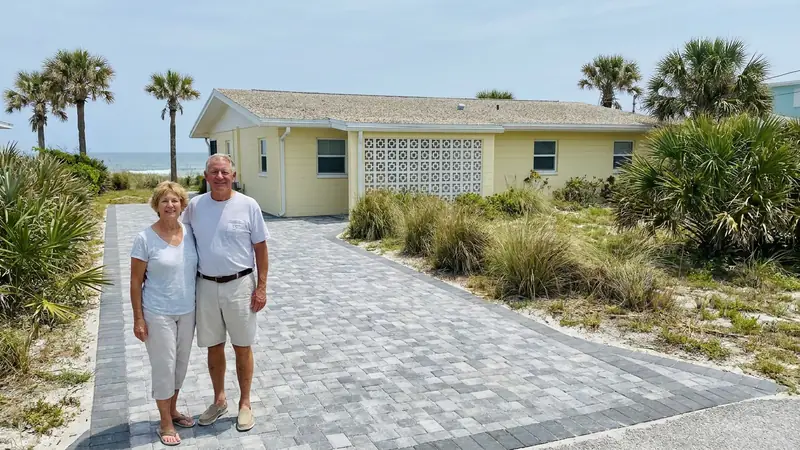
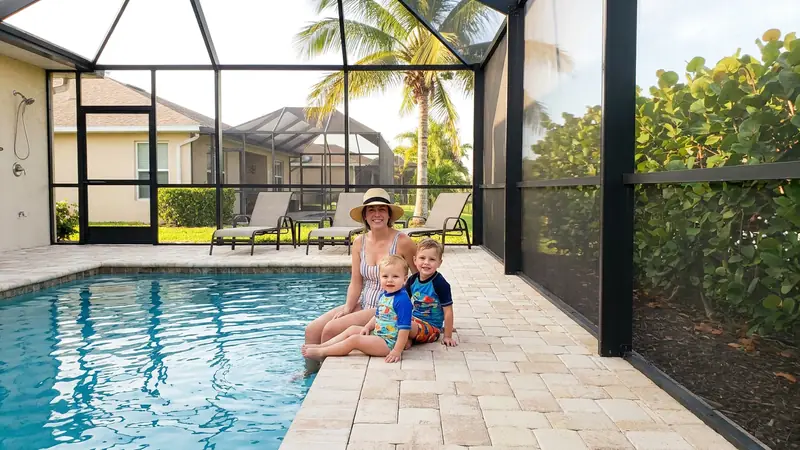
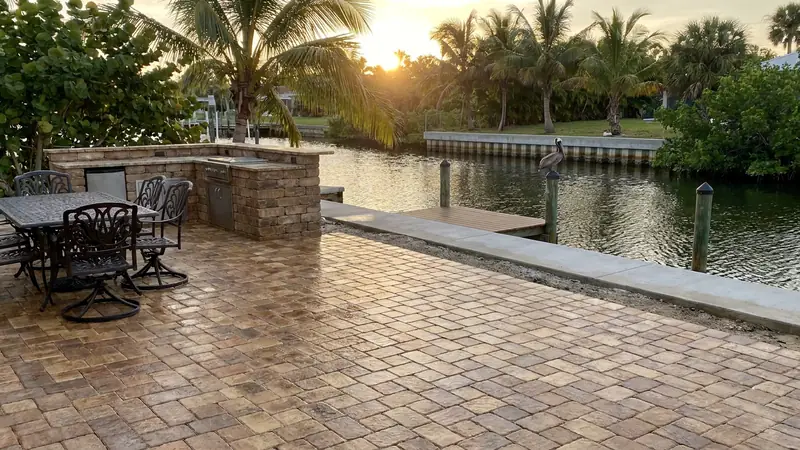
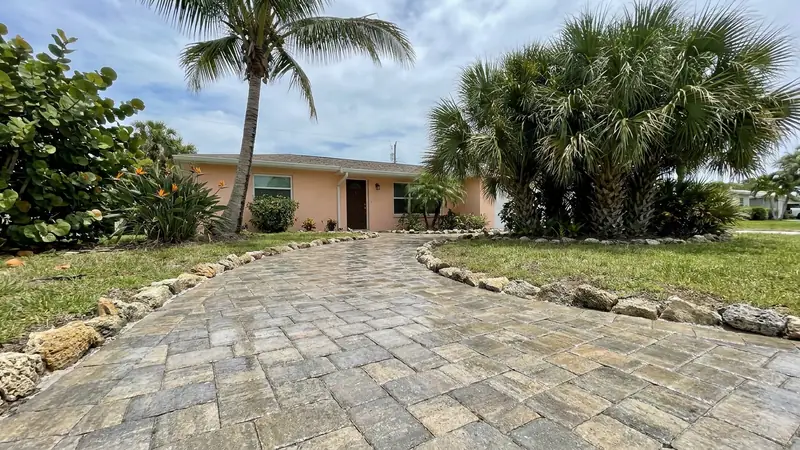
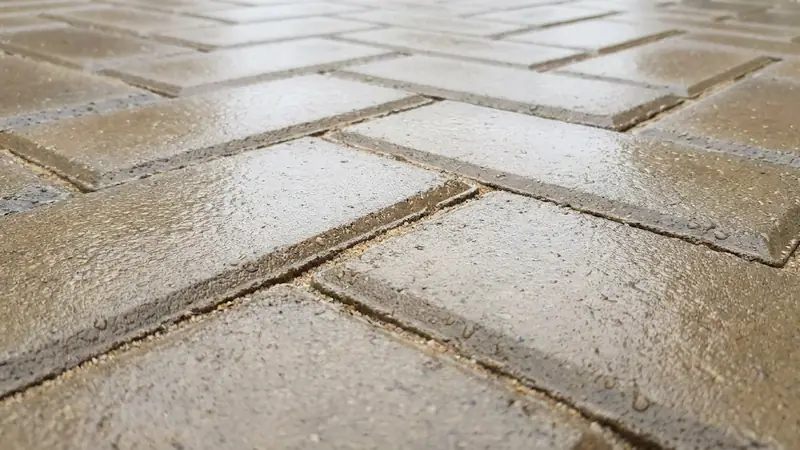
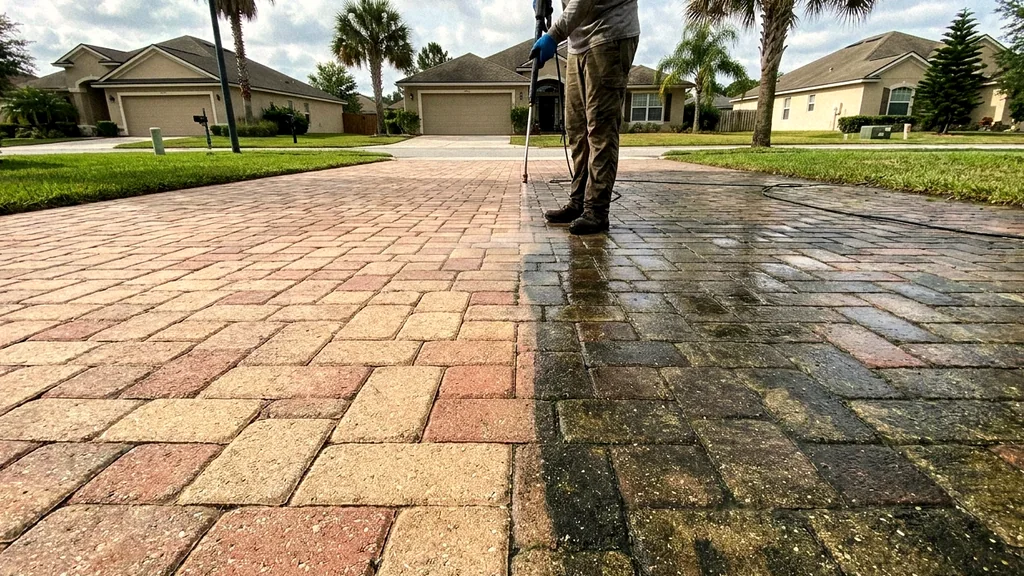
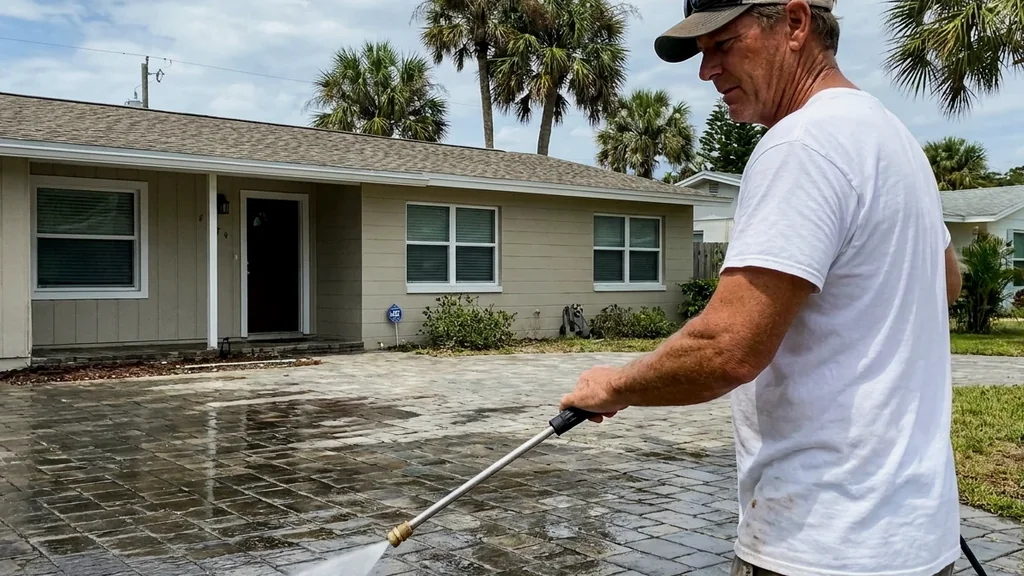
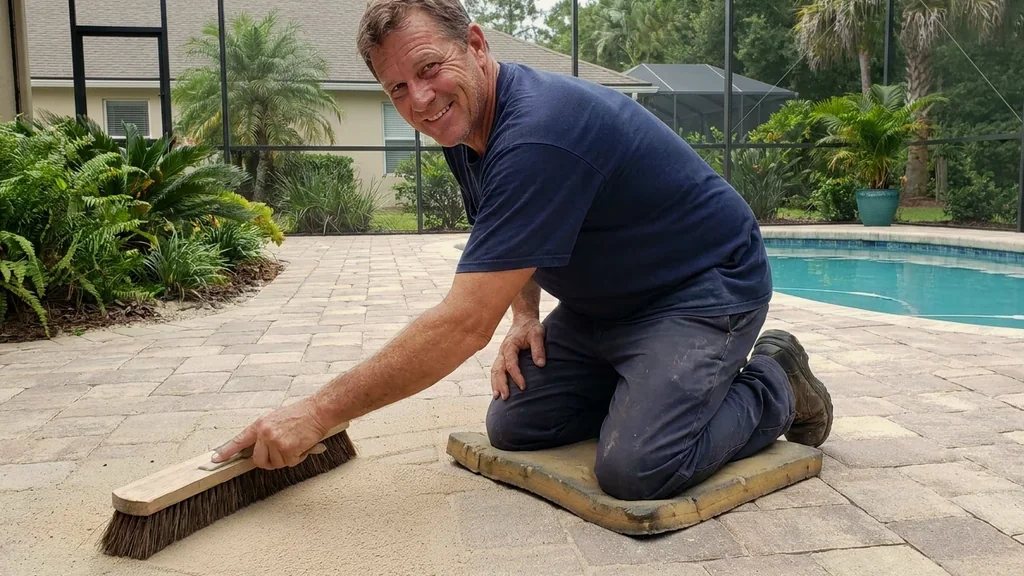
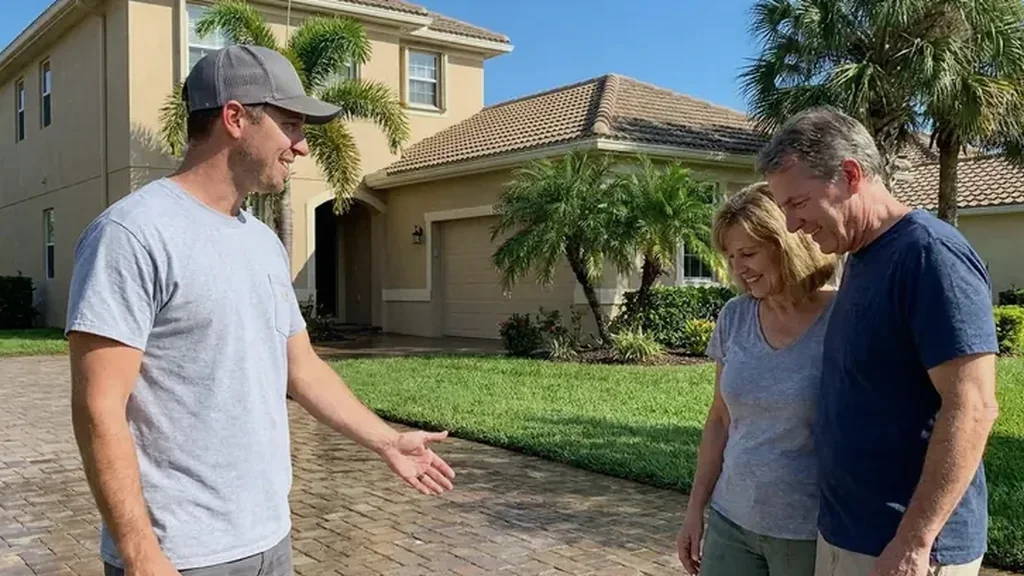
Why local matters in Port St. John
Why choose someone who works this area?
Many Port St John streets have no association, so a local contractor asks what you want, not what a rulebook says. That keeps the first call simple. A newcomer might assume rules that are not there. To speak with someone who works the north county, call (321) 455-5098.
How does the wet season shape the calendar?
Weather is part of local knowledge too. A long wet season and roofed patios mean some surfaces stay wet after the drive is dry. A local contractor builds in spare days. Ask through ask for a free estimate how a rained-out day gets rescheduled.
What does a big lot add to one visit?
Port St John runs along US 1 and I-95 on big lots, so one visit often covers a drive, a walk and a patio. Water, sand and sealer must be on the truck before the first wash. A contractor who knows the area packs for that. If it fits your property, ask for a free estimate.
What is Port St John like, and where do people spend time?
How did Port St John grow?
Port St John is an unincorporated area between Titusville and Cocoa, and its population rose from 12,267 in 2010 to 23,474 in 2020. It sits between US 1 and I-95, with the Indian River Lagoon to the east. Brevard County holds 71 percent of that lagoon. If you live in one of the newer sections, ask for a free estimate.
Which parks and landmarks sit nearby?
Fay Lake Wilderness at 6300 Fay Boulevard covers 192.7 acres and has a 27-acre fishing lake. Nicol Park sits on US 1 beside the river, and the community center on Corto Road is open seven days a week. The sports complex off Canaveral Groves Boulevard in Sharpes covers 207 acres. If you are near one of these parks, call (321) 455-5098 and tell the contractor your street.
Frequently Asked Questions
How many years pass between sealer coats on Port St John pavers?
Reseal on a two to three year cycle, says one Brevard company, though wider quotes allow up to five. Deep shade, sprinkler spray and daily traffic shorten the span. Covered patios that stay damp may need an earlier look than a sunny front drive. Faded or patchy pavers are the cue to ask for an estimate.
What does it cost to seal pavers in Port St John?
Brevard companies publish $1.85 to $4.00 per square foot to clean, sand and seal. Area drives the total, so an RV pad or a long walk costs more than a small patio. Old coats, rust and thin joint sand shift the rate. Ask that the quote lists the area it was measured from.
Is it a good idea to pressure wash pavers in Port St John?
Yes, cleaning is part of the job, but pressure matters. One Brevard company says to keep pressure at 1500 PSI or less on sealed pavers, since high pressure can blow out joint sand. Washing removes sand, so it is replaced before sealing. Ask the contractor what pressure and method will be used on your surface.
Is sealing pavers in Port St John expensive?
Cost follows area more than anything else. Next to a long drive plus a walk, a small patio costs far less at the published range. Ask for a free estimate and hold it against $1.85 to $4.00 per square foot. A good quote shows how much each paved area adds.
What are the drawbacks of sealing pavers in Port St John?
Sealer needs renewing, and timing matters. A wet look scuffs sooner than matte, and the pavers must be dry, so a rainy stretch can push the date. Ask what upkeep to expect before you agree to a day.
Does an HOA need to approve paver sealing in Port St John?
Often not, since most of the area has no mandatory association, but Cypress Woods and Hundred Acre Woods do. If your street has one, ask about finish rules before you book. The contractor needs the answer before choosing a product. Where a document calls for written approval, it is easier to get before the date is set.
When can cars go back on sealed pavers in Port St John?
Park elsewhere for 72 hours, a Brevard company advises. Feet can step on sooner, though cure time depends on the product and the weather. Ask the contractor for the exact wait on yours, and keep dogs and kids off the surface until then.
Why does my Port St John driveway have weeds in the joints?
Lost joint sand widens the joints, and weeds follow, according to a landscaping guide. Rain and washing both carry sand out. Fresh sand is swept in after the wash and before the coat, which holds the pavers steady and leaves weeds less room.
Can an RV pad or guest cottage walk be sealed with the rest?
A local guide says owners outside an association can generally add RV pads, outbuildings and guest cottages, so pavers here are often laid in stages. Ask for each paved area to be measured and quoted on its own line, then compare the total with the Brevard range.
Do early riverfront cottages and newer homes need different care in Port St John?
A local guide describes early riverfront homes as board-and-batten cottages and post-2010 production homes as clustered in the southeast and newer HOA areas. Older lots may carry older coats and mixed paver jobs, while newer ones are likelier to match. Tell the contractor which kind of street you live on.
How long is the wet season for planning a sealing date near Port St John?
A National Weather Service study of 22 years of rain data at a north Melbourne station found a wet season of about 138 days that brought 64 percent of the yearly rain. A Brevard company names September through May as the most suitable stretch, so the drier months are easier to book.
Nearby areas we serve
Ready for a Free Estimate in Port St. John?
Call (321) 455-5098 and tell us about your pavers.
Free, no obligation