
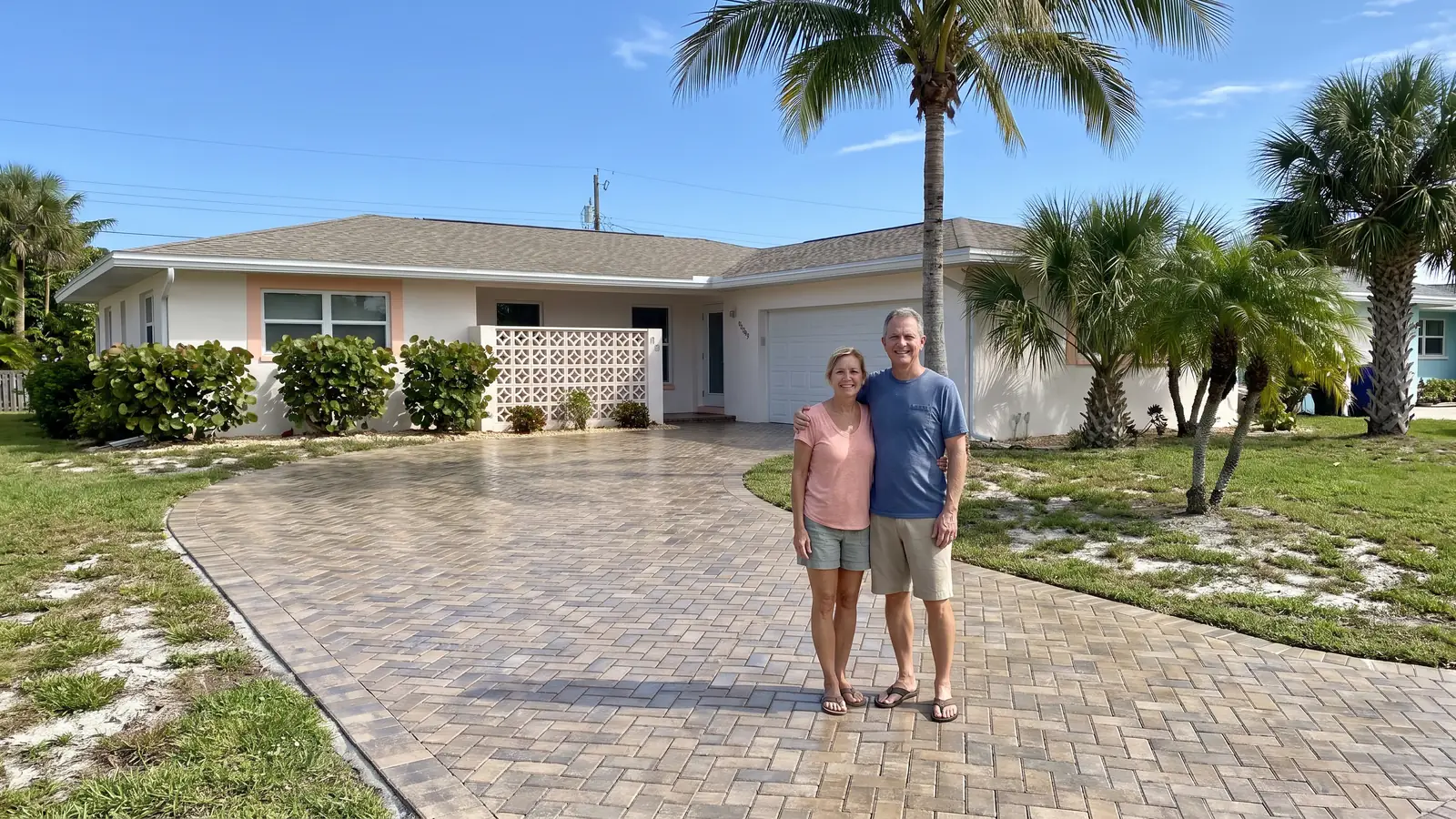
Paver sealing for Downtown Melbourne homes
Paver Sealing in Downtown Melbourne, FL
Faded pavers around Downtown Melbourne's New Haven Avenue can look even and clean again, so call (321) 455-5098.
- Brings out deeper paver color
- Fresh joint sand helps lock pavers in place
- Gives weeds less room to grow
- Makes the surface easier to keep clean
- Free estimate, no obligation
Request a Free Estimate
Free, no obligation.
Fast, careful paver sealing in Downtown Melbourne
Paver sealing in Downtown Melbourne begins with a free estimate on a driveway, walkway or patio. The contractor washes the pavers, refills the joints and seals them on the streets around New Haven Avenue. Send a request through ask for a free estimate and a reply comes within 1 business day, usually much sooner.
Take an older bungalow's front walk: gray, spotted, a weed in nearly every joint. A wash, new sand and sealer settle it into one even tone. Call (321) 455-5098 and say what the walk looks like if a conversation suits you better than a form. The visit and quote are free, and the next move is yours.
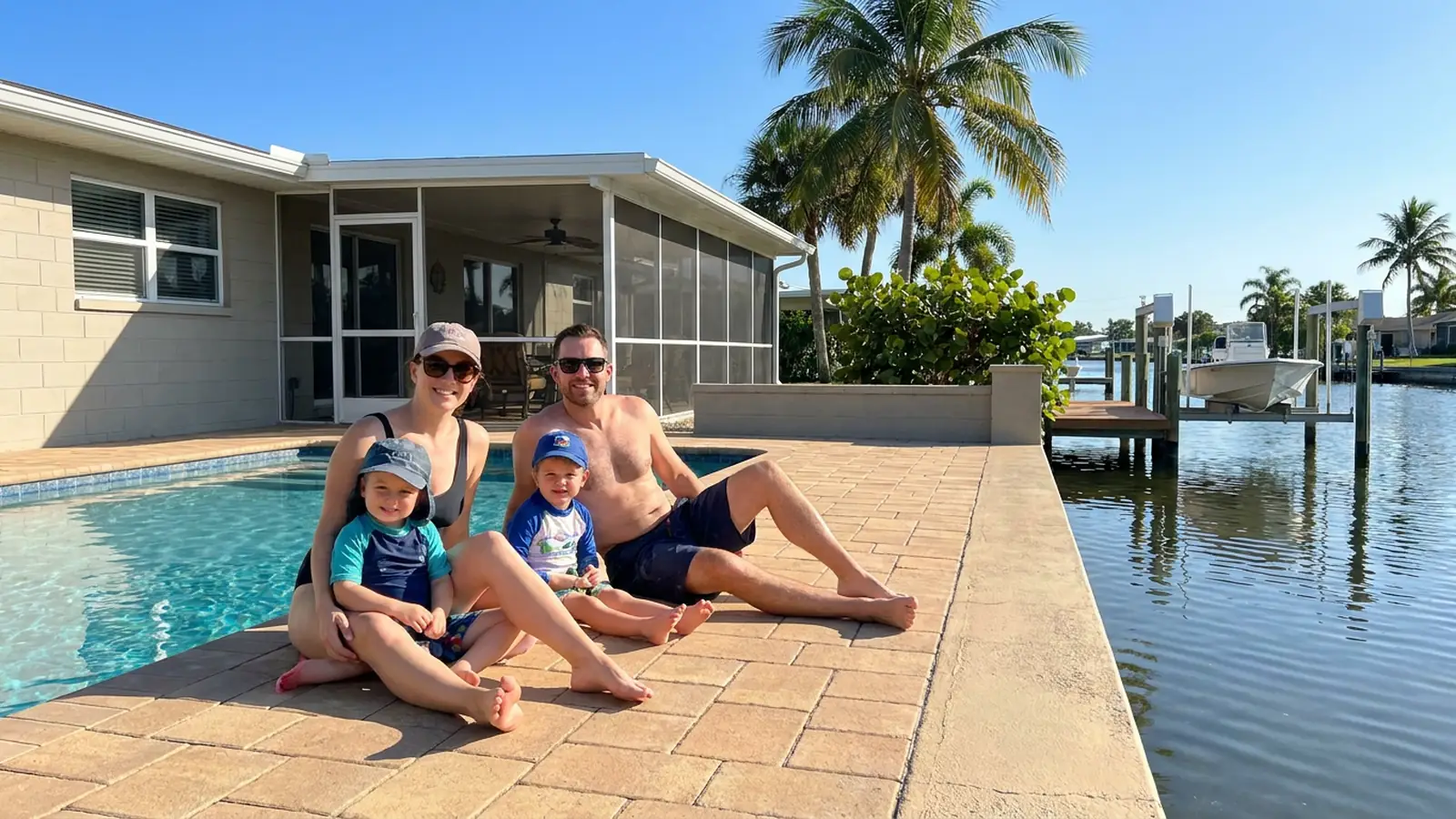
Why hire a local paver sealing contractor in Downtown Melbourne?
Downtown Melbourne mixes homes from the early 1900s with newer infill, so pavers sit in different settings from one block to the next. To hear how that changes a job on your street, ask for a free estimate.
See it, then price it
Someone visits your pavers near New Haven Avenue, measures them and quotes a price. Nothing is agreed until you say so.
A band to judge bids by
Posted Brevard rates run $1.85 to $4.00 per square foot. Use that band to judge any quote for your block.
Quiet finish for old fronts
Matte keeps pavers low-key beside Queen Anne and bungalow fronts. Gloss adds shine and shows scuffs sooner.
The decision stays yours
Date, finish and yes or no are yours. A Downtown Melbourne estimate carries no obligation.
Get Your Free Estimate in Downtown Melbourne
Tell us about your pavers in Downtown Melbourne.
Free, no obligation
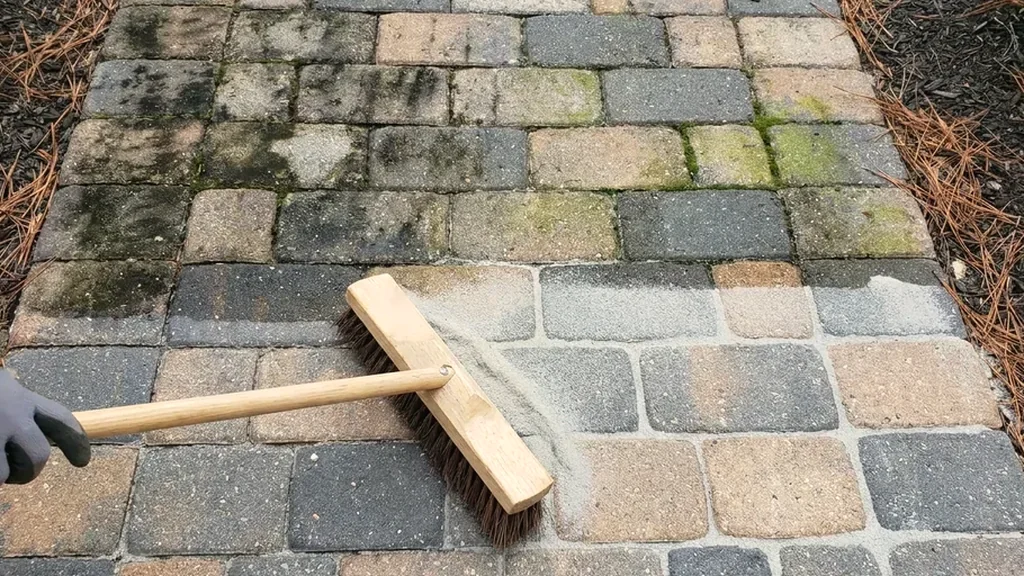
What paver problems show up most in Downtown Melbourne?
Rain that runs toward the lagoon
Wikipedia says about 80 percent of Melbourne's land drains toward the Indian River Lagoon. On a flat downtown lot, that means rain slides across the driveway and carries sand toward the street. Joints that lose their sand widen, and weeds follow. Fresh sand is the first thing to restore, ahead of any sealer. Where the water leaves your lot tells the contractor where sand is most likely to be missing. Walk your own lot after a storm and note where the water pools or runs.
Green film on shaded side walks
A Melbourne historical trail notes that Meyers' Subdivision has long, narrow lots, unlike most of its era. A walk on a lot like that often runs between two houses, where the sun seldom lands. Green film settles on pavers that stay shaded and damp, and treatment helps little where they never dry. Expect it to start in those side runs first, then creep toward the front. Shade from a neighbor's wall or tree counts the same as shade from your own house.
Sealer from a past owner
Homes near New Haven Avenue date back to 1905 and earlier, and many have changed hands more than once. Pavers there were laid later, possibly with a product nobody wrote down. A mismatch is a real problem, since a water-based sealer will not hold over a solvent-based one. So the first job is to learn what is on the surface, and only then pick a product. A saved receipt or a product name from an earlier job speeds up the first visit. The pavers may be newer than the house, so its age does not say what is on the surface. On a lot that narrow, one run of pavers may reach from the street to the back door, so a damp spot can spread.
Rust marks from sprinklers
A yard watered from a well can mark pavers. University of Florida extension notes that most Florida well water carries a lot of iron, which can streak surfaces orange when it is sprayed. Look along the walk where the spray lands for rust-colored lines. Rust gets treated ahead of the coat, because the coat would seal it in. Turning the spray heads toward the lawn and away from the walk keeps fresh marks from forming.
A long wet season
The National Weather Service found that Melbourne's wet season runs about 138 days and brings nearly two thirds of the year's rain. Sealer needs a dry surface, so a Downtown Melbourne job can slip when storms stack up. Pavers that stay damp under shade take longest to dry. Booking a date is easier when the contractor knows to leave room in the schedule. Rain also pushes joint sand around, so a wet summer can undo a good sand job if the joints were never sealed. Plan the sealing around that dry window rather than around a fixed date. On a block that mixes old and new homes, pavers of different ages can dry at different speeds.
Does paver sealing change between old New Haven Avenue streets and newer blocks?
Does the old part of town differ from newer infill?
Yes, because the old part of town and the newer infill have different lots, different ages and different histories. Holy Trinity Episcopal Church went up on West Strawbridge Avenue in 1886, and the Nannie Lee House on East New Haven Avenue dates to 1905. Pavers beside homes that old were added later, so you may not know who laid them or what they were sealed with. Tell the contractor your street when you ask for a free estimate.
What do the Oak Street blocks look like?
Oak Street was renamed in 1915 for the first wife of a local developer, and it runs through blocks that have long, narrow lots. Narrow lots mean narrow drives and walks, and gear sometimes has to be carried in by hand. That is worth mentioning when you call (321) 455-5098, so the contractor can plan the cleaning and the sanding around your layout. Newer infill lots in the same area are often wider, which can make the job quicker.
Which properties carry historic status?
A few Melbourne properties carry historic status. The city says it has designated six historic resources and one historic district since 2006, and it requires a Certificate of Appropriateness before a permit for exterior changes on those. The city page does not mention sealing by name, and it says ordinary maintenance that needs no permit does not require one. Ask city staff about your address, then ask for a free estimate once you know.
What does paver sealing cost in Downtown Melbourne?
How far does the Brevard range stretch downtown?
Brevard County companies commonly publish $1.85 to $4.00 per square foot to clean, sand and seal. In Downtown Melbourne, shade growth, lost joint sand and old sealer move a job around inside that range. Walkways and patios are measured with the driveway, so a bigger layout means a bigger total at the same rate. To price your own pavers, ask for a free estimate; the estimate is free.
How does access change the number?
Access changes the number as well. A narrow side drive or back courtyard takes longer than an open front drive, since tools get carried in. Rust marks and old sealer add steps. Call (321) 455-5098 to sort out which of these fit your property.
| Paved area | Typical example | Clean, sand and seal |
|---|---|---|
| 300 sq ft | Small patio or walkway | $555 to $1,200 |
| 600 sq ft | Two car driveway | $1,110 to $2,400 |
| 1,000 sq ft | Large driveway or pool deck | $1,850 to $4,000 |
| 1,500 sq ft | Driveway plus pool deck | $2,775 to $6,000 |
Math based on the $1.85 to $4.00 per square foot that Space Coast paver companies publish. Your contractor sets the actual price after seeing the surface. Repairs, leveling and stripping failed sealer are usually extra.
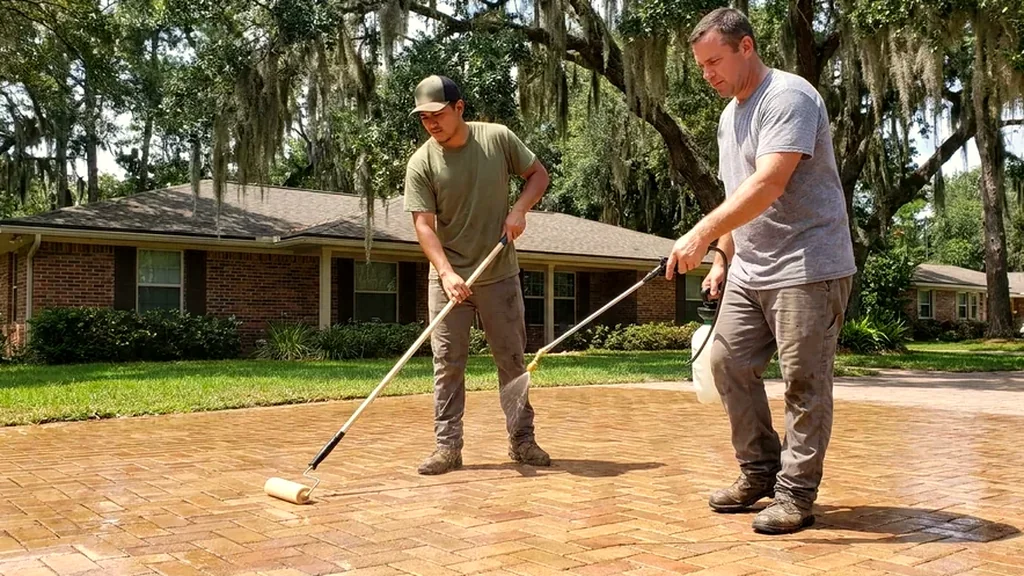
How does a paver sealing job work in Downtown Melbourne?
Look over the lot
The contractor studies how water leaves your pavers and where walls or neighbors cast shade. Low or raised pavers are reset first, because a coat keeps any dip it covers. If an earlier owner sealed them, the product type decides what can follow, so share what you remember. Narrow lots like those in Meyers' Subdivision can limit where equipment sits, and the area is measured here because price is per square foot.
Wash, treat, rinse
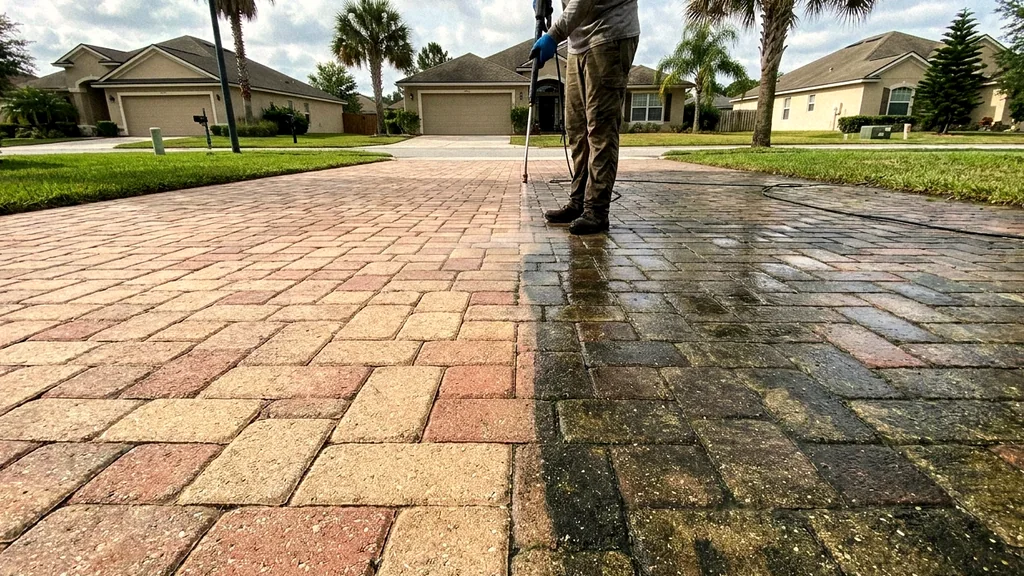
One Brevard company describes three passes: a pretreat, a clean and rinse, and an efflorescence treatment. Around New Haven Avenue the targets are green film on shaded side walks and rust left by sprinklers. Rinse water is steered away from old wood siding and flower beds. The same wash clears moss or algae where shade keeps the pavers damp, though treatment helps little where they never dry out.
Sand the joints
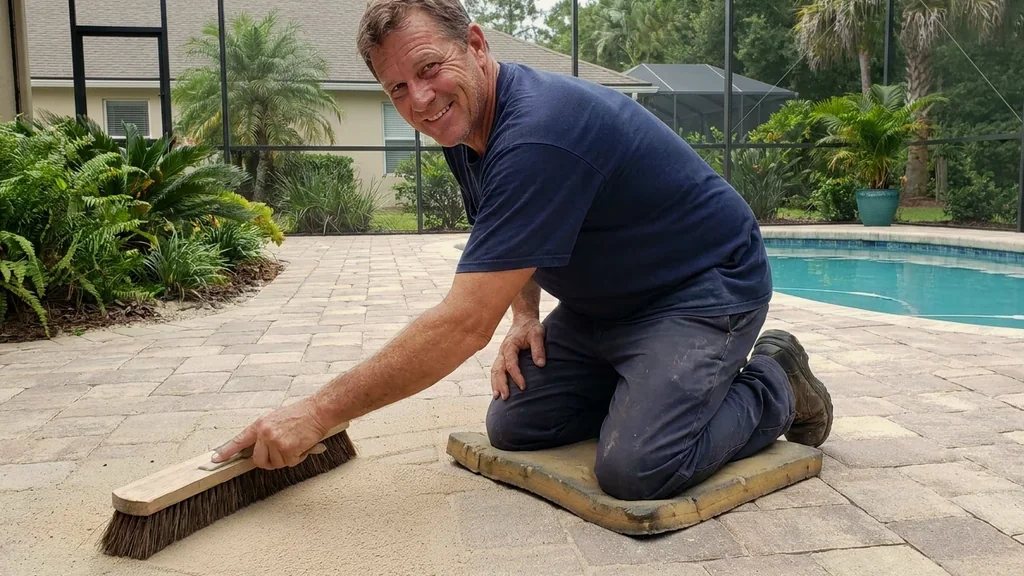
Washing lifts joint sand out along with the dirt, so new sand goes in before the first coat. A gap invites soil, and soil invites weeds. Joints that have sat low for years may need more sand than they appear to, and the edges of a walk lose sand first. Lost sand widens joints and weeds follow, so refilling is part of protecting the surface and not an extra. Ask what sand is planned for your walk.
Choose a dry day
Sealer needs a dry surface, and Melbourne's wet season runs about 138 days. The contractor watches the forecast and holds the job for a dry day. A Brevard company points to September through May for drier, less humid weather. Shaded walks beside older homes dry slowest, so they are checked last. If rain is in the forecast, the date moves, which beats sealing damp pavers. Ask how the contractor tells you when a day slips.
Apply the coats
The finish you chose goes on in two coats. Gloss scuffs sooner than matte, which counts on a driveway used daily. Quotes here often put the next coat two to five years out, and a Brevard company asks owners to keep cars off for 72 hours. Ask what will shield the garage door, siding and shrubs from overspray. Cars stay off until the contractor says the coat has cured, and pets and children stay off the walk as well.
Complete paver services in Downtown Melbourne
What order does a job follow on an older lot?
On an older Downtown Melbourne lot the sequence runs wash, stain treatment, sand, dry wait, sealer. The wash lifts green film and sprinkler rust before anything gets locked in, and sealer always goes last. To learn how long each stage runs at your address, call (321) 455-5098.
Which surfaces show wear first?
Front walks and narrow side drives hold shade and dampness, so they green up first. Wide driveways take tires and street runoff, and back patios take chairs, planters and foot traffic. List your surfaces when you ask for a free estimate, since each one wears differently.
Which sealer fits an older front?
The sealer choice has two parts: water-based or solvent-based, then matte or gloss. An earlier owner's coat settles the first part, since the two types do not bond. On an older front, matte keeps attention on the house. Call (321) 455-5098 to compare finishes.
How does a long wet season shift the day?
The wet season here is long, so a sealing day can slide. Shaded side walks stay wet well after a sunny drive dries, and crews wait for a dry surface. Lower humidity in the drier months leaves more room to work. To find a date for your street, ask for a free estimate.
Questions to ask before you hire
- Do you seal a pool deck any differently than a driveway?
- Will you find sunken pavers and fix them before sealing?
- How do you deal with the white haze that can show up under a sealer?
- Will you cover my plants and shrubs before you spray?
- What do you use to lift rust marks from well water off my pavers?
- Is the estimate in writing, and does it name the sealer?
- Does the quote say if the joint sand gets replaced, and with what kind?
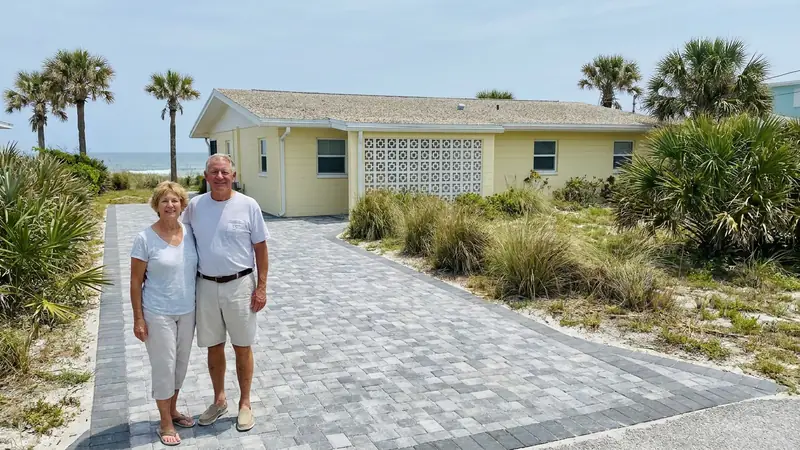
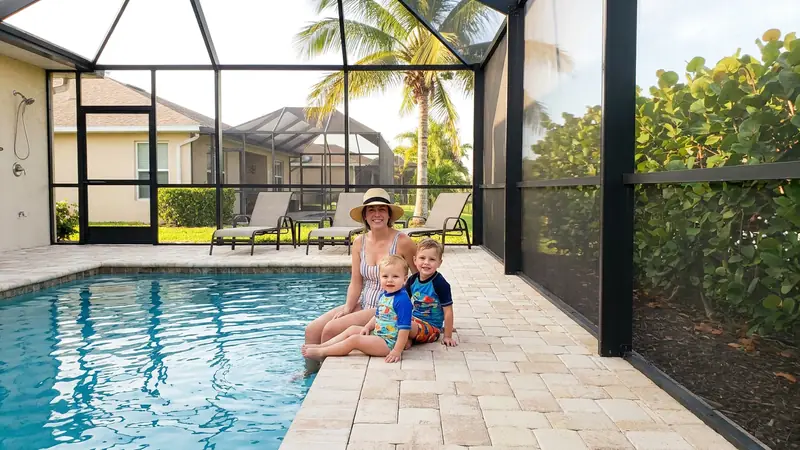
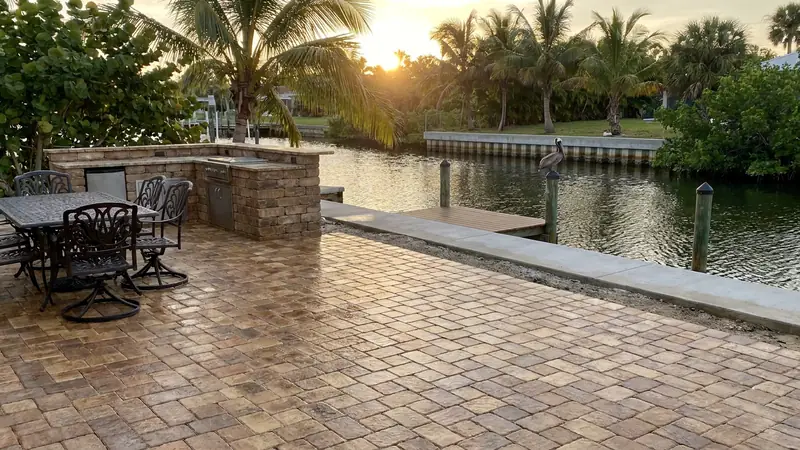
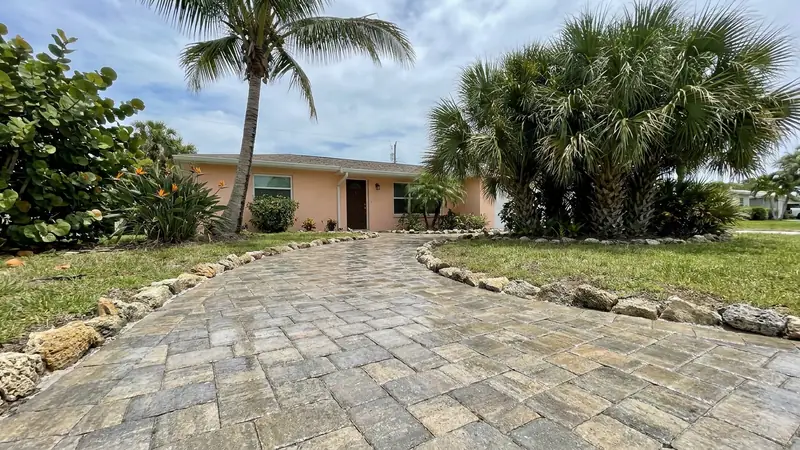
What do sealed pavers look like around Downtown Melbourne?
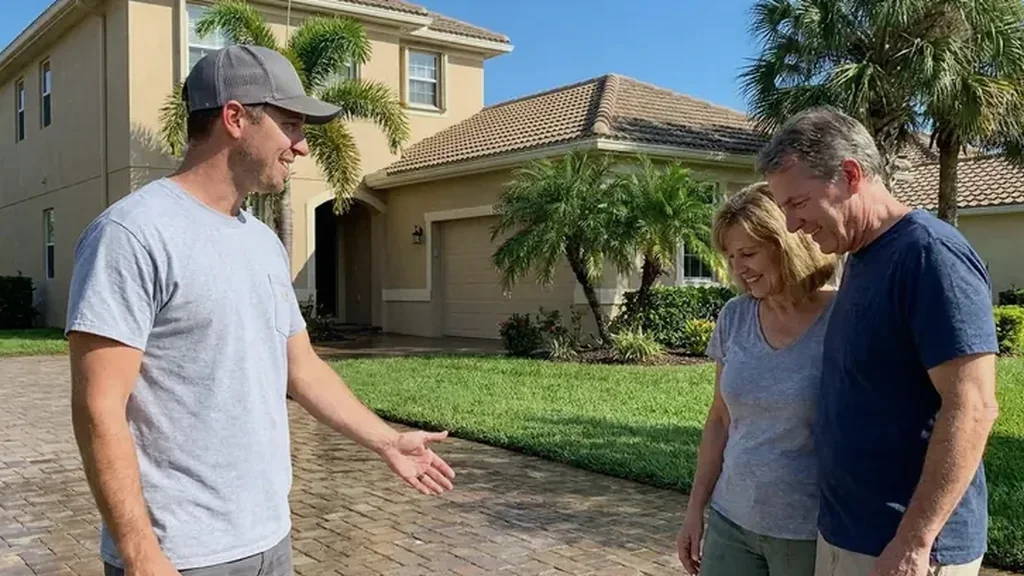
Why local matters in Downtown Melbourne
Why does the age of the house come up first?
A contractor who knows Downtown Melbourne asks how old your house is and whether the pavers came with it. The answer shapes how much cleaning and what kind of care the job needs. Someone from across the county may skip it. To reach a contractor who works the older streets, call (321) 455-5098.
How does the wet season shape the calendar?
Rain is the other local piece. Most of Melbourne's yearly rain falls in a long wet season, so a good sealing day takes planning. A local crew leaves room in the schedule. To learn how a day lost to rain gets rescheduled, ask for a free estimate.
Why do old buildings need rinse care?
Older streets bring wood and masonry buildings right beside the pavers, so rinse water and cleaners need care. Small lots also mean tight access for equipment. If that sounds like your property, ask for a free estimate and mention roughly when the house was built.
What should you note before the visit?
Before the visit, walk the property and note three things: where water pools after a rain, which stretches stay green, and where an earlier coat has gone patchy. Photos help, especially of the narrow side drive and the front walk. Send them with your request through ask for a free estimate, and the contractor can arrive already knowing what to look at.
How do you use each paved area?
Think about how you use each paved area. A front walk that sees mail carriers and guests needs a grippy finish, a driveway has to stand up to tires, and a back courtyard may hold furniture that drags. Say which matters most when you call (321) 455-5098, and the contractor can suggest a finish to match.
How did Downtown Melbourne grow, and why does that matter for your pavers?
How did a village and a fire shape downtown?
Downtown Melbourne grew from a village incorporated in December 1888, and a fire in 1919 reshaped it. The blaze destroyed most of the original downtown along Front Street, and the business district was rebuilt west of US 1. The Myles Building on East New Haven Avenue dates to 1913, and the Henegar Center to 1919. If you live near those blocks and your walkway needs work, ask for a free estimate.
Where did the street names come from?
The street names still tell the story. New Haven Avenue is named for the hometown of Lucy Boardman, and Strawbridge Avenue for Emma Strawbridge, who owned the Carleton Hotel. The city was first known as Crane Creek, and US 192 now crosses the Melbourne Causeway to Indialantic. If one of these landmarks is close to you, call (321) 455-5098 and give the contractor your street.
Which old landmarks stand nearby?
Holy Trinity Episcopal Church dates to 1886, the Myles Building to 1913 and Henegar Center to 1919. The Nannie Lee House was built in 1905, and the Melbourne Hotel opened on September 23, 1924. Anyone near buildings this old is working with an older lot. Share the age of your house when you ask for a free estimate.
Frequently Asked Questions
How often should you seal pavers in Downtown Melbourne?
Every two to three years is the span one Brevard company gives, and wider quotes run from two to five. Heavy shade or daily tires pull a Downtown Melbourne surface toward the short end. Checking the joints in spring shows whether any sand has gone missing.
How much does it cost to seal pavers in Downtown Melbourne?
Published prices for Brevard run $1.85 to $4.00 per square foot to clean, sand and seal. Shade growth, old sealer and missing joint sand move a job inside that band. Get the measured area in the quote, since the total is that area times the rate.
Is there a downside to sealing pavers in Downtown Melbourne?
The costs of sealing are upkeep and finding a dry window. Sealer wears down and needs another coat later, and a glossy look shows scuffs before matte does. The surface must also be dry, which a long wet season can make hard to arrange. Ask what upkeep the finish will need before you pick a date.
Should pavers be sealed in Downtown Melbourne?
Often, yes, since a coat helps hold joint sand and slows weeds and green film. Melbourne gets about 51 inches of rain a year, most of it in a long wet season. Sealed pavers shed that water better than bare ones that stay damp. A contractor can look at yours and say plainly whether it will help.
Does Downtown Melbourne water stain pavers?
It can, if your sprinklers draw from a well. Most Florida well water is high in iron, per UF/IFAS, and spraying it on pavers can leave orange streaks. A rust mark is treated before the coat goes on, since sealer would hold it in place. Aiming sprinklers at the lawn keeps new rust from showing up.
Can new sealer go over an old coat on Downtown Melbourne pavers?
Sometimes not, because a water-based product will not bond to a solvent-based coat. Someone has to identify the old coat before a new one is chosen. A receipt or a can label from the earlier job settles it. Without one, a small test patch can show how the surface reacts.
Do I need city approval to seal pavers in Downtown Melbourne?
For most homes, probably not, but it depends on your address. Melbourne requires a Certificate of Appropriateness for exterior changes on designated historic properties, and it says ordinary maintenance that needs no permit does not require one. Ask city staff if your home is a landmark. An address check takes a few minutes.
How long before I can drive on sealed pavers in Downtown Melbourne?
People can walk on it sooner, but a Brevard company asks owners to wait 72 hours before driving. That company puts a full cure at 48 hours. Cure time shifts with the sealer and the weather, so ask for the exact wait on your product.
Does Melbourne's historic district rule cover sealing my pavers?
The city requires a Certificate of Appropriateness before a permit for exterior changes on designated properties. It says ordinary maintenance that needs no permit does not require one. Ask the city whether your address is designated before you book, and keep the answer for the contractor.
Why do old Downtown Melbourne walks turn green so fast?
Shade and dampness do it. Moss and algae should not normally grow on concrete pavers unless the area is heavily shaded, and treatment helps little where pavers stay damp. A wash clears the film, and trimming back what shades the walk gives the surface a chance to dry.
How much of Melbourne drains toward the lagoon?
Roughly four fifths of the city's land drains toward the Indian River Lagoon. For a homeowner that means rain on your pavers runs somewhere, so look at where your driveway sheds water. Low spots that hold puddles get reset before any coat goes on.
What do Melbourne's weather months mean for a sealing date?
The city averages about 51 inches of rain a year, with a hot, wet season from late May through October and a warm, dry season from November through April. A Brevard company names September through May as most suitable, so late fall and winter are easier to schedule.
Ready for a Free Estimate in Downtown Melbourne?
Call (321) 455-5098 and tell us about your pavers.
Free, no obligation