
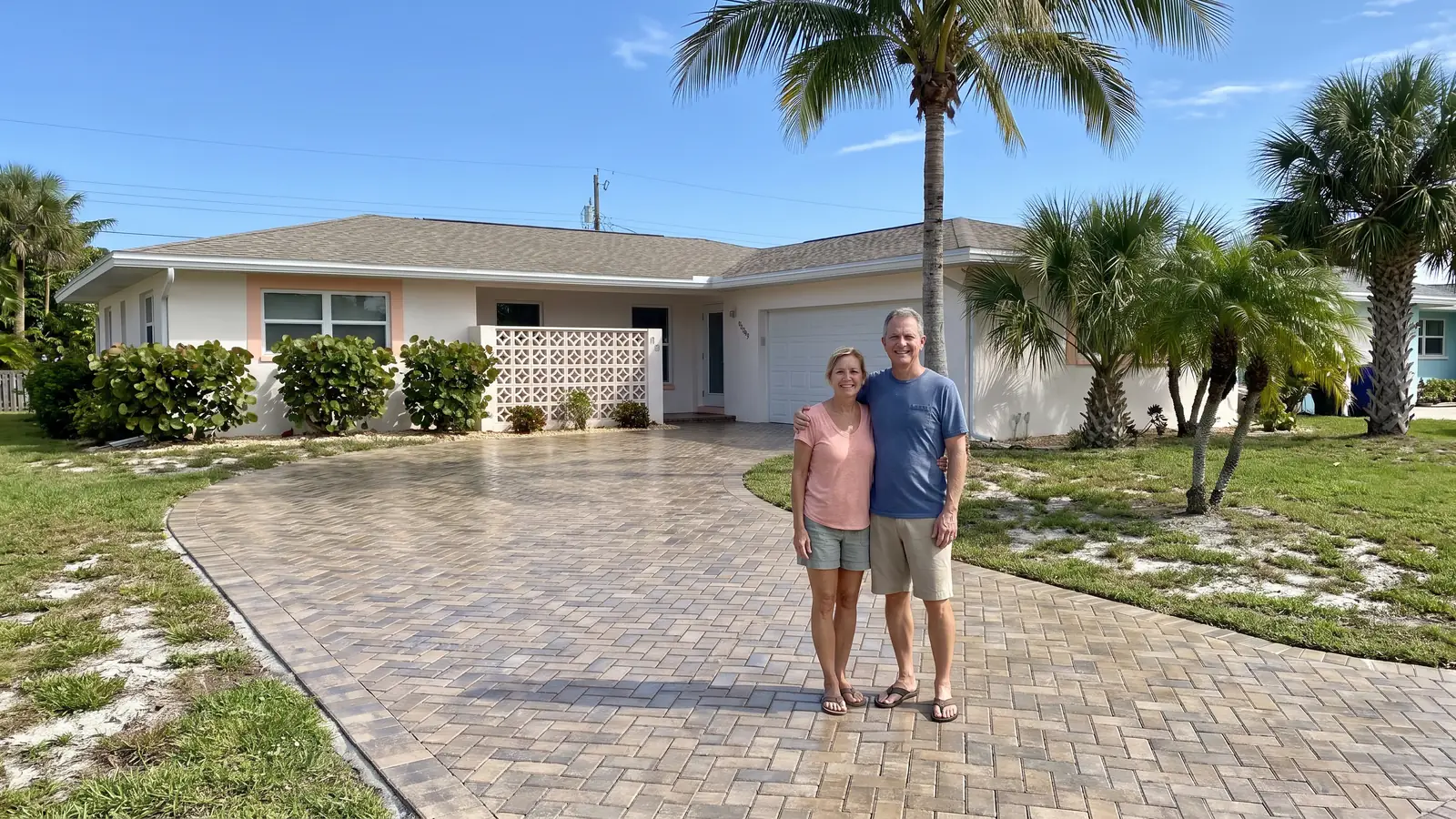
Faded, hazy pavers brought back to firm and even
Paver Restoration in Satellite Beach, FL
Call (321) 455-5098 for a free paver restoration estimate on faded, hazy or sinking pavers in Satellite Beach.
- Brings out deeper paver color
- Fresh joint sand helps lock pavers in place
- Gives weeds less room to grow
- Makes the surface easier to keep clean
- Free estimate, no obligation
Request a Free Estimate
Free, no obligation.
Can my pavers be restored in Satellite Beach, and how soon will someone reply?
A local contractor can restore and reseal pavers across Satellite Beach, FL, and a reply comes within 1 business day, usually much sooner. The estimate is free, and you owe nothing for asking. To start, call (321) 455-5098.
Restoration is for pavers that have gone past a simple wash. The color is flat, the old sealer looks milky or flaky, sand has left the joints and a few pavers have settled. A restoration treats those one at a time, then finishes with a fresh coat that matches the pavers underneath. Point out the worst section of your driveway or patio when you ask for a free estimate.
Should I restore my pavers or replace them?
Restoring is usually the smaller job when the base is solid. A South Florida restoration company says restoration makes sense when the base probes firm, the damage is cosmetic and under about 40 percent of the pavers have failed structurally. It points to replacement when more than half the field is failing or the drainage is wrong from the start. Ask which side your pavers land on when you ask for a free estimate.
Matching matters too. If the paver style is still sold or can be matched, a few bad stones can be swapped. If it is discontinued, the repair shows. A contractor who looks at the whole surface before quoting is the one to talk to, so call (321) 455-5098 and ask for that look.
How do I know the old sealer on my pavers has failed?
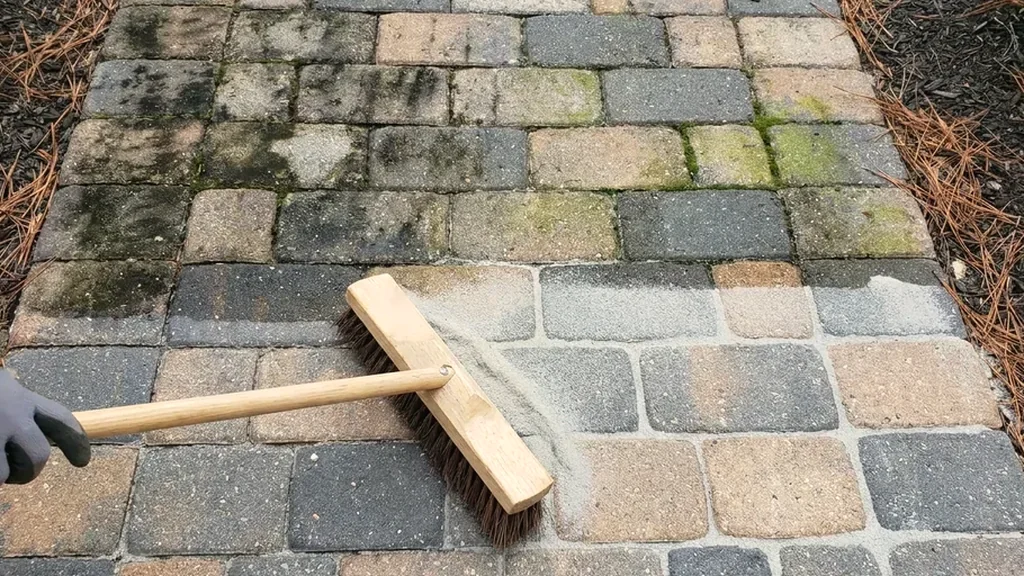
A contractor tests with a little water on the surface. If it beads, the coat is still working. If it soaks in and darkens the paver, the sealer is spent, a test the South Florida company describes and Outercle describes for stone. Other signs are a white haze, flaking at the edges and a rough, chalky feel under bare feet. Note where your driveway looks worst before you call (321) 455-5098.
Color is a clue too. A coat that has faded in sun can leave pavers a shade lighter than the sheltered strip next to the house. Sealer cannot make that strip match, but a restoration can even it out by treating the whole field the same way. For a second opinion on what you see, ask for a free estimate.
Why does old sealer turn white or peel?
Two causes show up again and again. The first is moisture trapped under a coat that cannot breathe, which leaves a white blush. The second is layering: a new coat on an old one, and then another, until the surface flakes and holds humidity. Unilock adds that a whitish film can come from trapped water or from a second coat put on too early. If either sounds like your pavers, call (321) 455-5098.
That is also why one company that repairs and seals pavers in Brevard County uses a breathable sealer, applied by sprayer. Satellite Beach sits at 13 feet above sea level between a lagoon and the ocean, so pavers there are never far from moisture. Pavers that stay damp are the ones that show haze first. Ask which sealer is planned when you ask for a free estimate.
Does the old sealer have to be stripped before resealing?
Only if it has failed. The South Florida company says never to seal over failed sealer: strip it first, then reseal. A water-based stripper dissolves old layers, a deep clean follows and the pavers dry before anything new goes on. If the old coat is intact, Unilock says to test old and new sealer together, since some will not mix. To have that test run on a spare corner, ask for a free estimate.
Stripping is the part that changes the price, because the amount of work depends on how many layers are on the surface and how white or peeled they are. That is why a number given over the phone for a hazy driveway is a guess. Ask for an inspection and a written scope, or call (321) 455-5098.
What happens to the joint sand during a restoration?
Sand is half the story. The South Florida company says old joint sand should come out completely and new polymeric sand be installed and compacted, because fresh sand layered over old does not bond. It also says plain sand washes out in Florida rain. Satellite Beach gets 34.2 inches of rain a year, with 5.19 inches in the wettest month, so joints that hold are worth paying for. To ask what sand is planned, call (321) 455-5098.
A Brevard County company also describes hydro-compacting the sand before the sealer coat. Either way, the joints should be full, firm and dry before sealing starts. Empty joints let pavers shift and give weeds a start, so a restoration that skips them is half done. Ask for the sand named in the quote when you ask for a free estimate.
What about sunken or lifted pavers on a sandy lot?
Sealer cannot lift a paver, and Travertine Mart and Unilock both say sealing does not fix drainage or base problems. A Brevard County company lists sandy soil near the river and beach, roots from sea grape and palms and failed base layers as reasons pavers sink or rise. Satellite Beach has sand, marl and coquina deposits under it, so settling is not unusual. Point out low spots when you ask for a free estimate.
The repair steps the same company lists are: lift only the affected pavers, rebuild the base with crushed stone, re-level, lock the edge with a restraint, then sand and seal. A driveway edge that keeps spreading is worth fixing before the coat. A crew that does repairs and sealing in one visit saves a second trip, so ask about both when you call (321) 455-5098.
What problems does restoration solve on pavers here?
Most restoration jobs come down to the five problems below. Find your own in the list and call (321) 455-5098.
Flat, faded color
Years of sun and rain thin a coat and leave pavers a washed-out tan or gray. A clean and fresh coat brings the shade back.
Hazy or peeling sealer
Trapped moisture or stacked coats leave white blush and flaking. The old layer comes off before anything new goes on.
Empty joints
Rain and wind pull sand out, and the pavers rock. New polymeric sand locks them back in place.
Low spots and lifted edges
Settling or roots leave puddles and trip points. Those pavers are lifted, the base is rebuilt and they are set level.
Green growth and salt film
Damp shade and sea air stain pavers that look fine in the sun. A soft wash clears it before the finish goes on.
What is the paver restoration process from inspection to final coat?
The order below is what a restoration usually follows, and a step is skipped only when your pavers do not need it. To set up the inspection, call (321) 455-5098.
1. Inspect and test
The contractor probes the base, runs the water test on the old sealer and marks sunken, loose or stained pavers.
2. Strip failed sealer
Hazy or flaking coats come off first with a stripper, and a deep clean follows. Intact coats are tested for compatibility instead.
3. Reset the low spots
Only the affected pavers are lifted, the base is rebuilt and leveled, and the pavers go back down even with their neighbors.
4. Replace the joint sand
Old sand comes out, new polymeric sand goes in and is compacted, then the surface is swept clean.
5. Dry, seal and walk through
Once the surface is dry, a breathable sealer goes on, and the contractor explains how long to stay off it.
How long does a paver restoration take?
A South Florida restoration company puts a patio at one to two days on site and a large driveway at two to three. Stripping, drying time and the walk-through add to that, and rain can move the day, because Unilock wants up to 48 hours of dry weather after sealing and clear skies before. Plan to stay off the pavers until the contractor says they are ready. To ask about a date, call (321) 455-5098.
How long will restored pavers last?
Expect two to three years between maintenance cycles, in line with the two to three years a Brevard County paver company gives for resealing. Unilock gives three to five for a sealed surface, and a sunny coastal driveway sits at the short end. A yearly rinse and a look at the joints stretch the interval. Ask for a simple care sheet when you ask for a free estimate.
What does paver restoration cost in Satellite Beach?
The price depends on how far the pavers have gone. A plain reseal costs far less than stripping, re-sanding and resetting. The table below applies the published Brevard County range to the simple jobs and leaves the heavy one unpriced on purpose. To get a number for your pavers, ask for a free estimate.
Compare your bid with the paver sealing page, which covers a standard reseal. If you only want a wash, see paver cleaning. Or call (321) 455-5098 and ask what your pavers need.
| Starting point | Typical work | Size | Published rate per sq ft | Range |
|---|---|---|---|---|
| Sealer worn but pavers firm | Clean, sand and seal | 400 sq ft | $1.85 to $4.00 | $740 to $1,600 |
| Faded color and empty joints | Clean, sand and seal | 600 sq ft | $1.85 to $4.00 | $1,110 to $2,400 |
| Dull color, joints mostly full | Clean, sand and seal | 1,000 sq ft | $1.85 to $4.00 | $1,850 to $4,000 |
| Large pool deck, empty joints | Clean, sand and seal | 1,500 sq ft | $1.85 to $4.00 | $2,775 to $6,000 |
| Hazy or peeling sealer, sunken spots | Strip, reset, re-sand, reseal | Any size | No Brevard rate found | Priced after inspection |
The first four rows apply the published Brevard County range of $1.85 to $4.00 per square foot to clean, sand and seal, from a Brevard County paver company. No page I opened gives a Brevard rate for stripping old sealer or resetting pavers, so the last row has no number. Those jobs depend on how many layers of sealer are on the pavers and how many pavers have moved.
Which Brevard County towns can get paver restoration estimates?
A local contractor covers Satellite Beach and the towns below. Pick yours, or call (321) 455-5098 about a street that is not on the list.
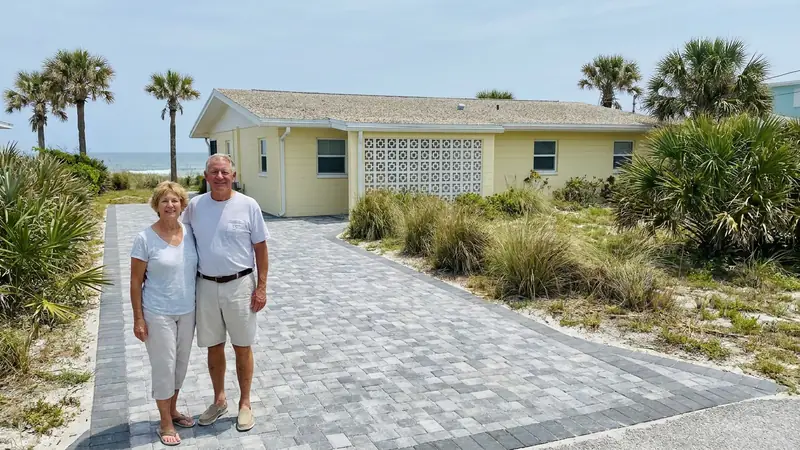
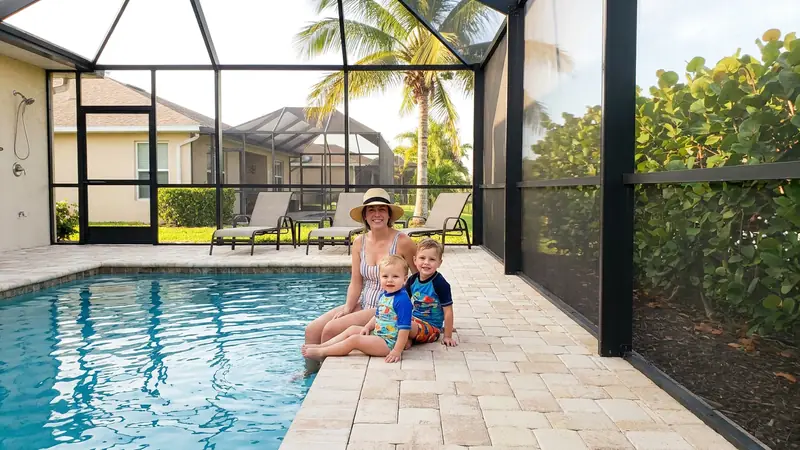
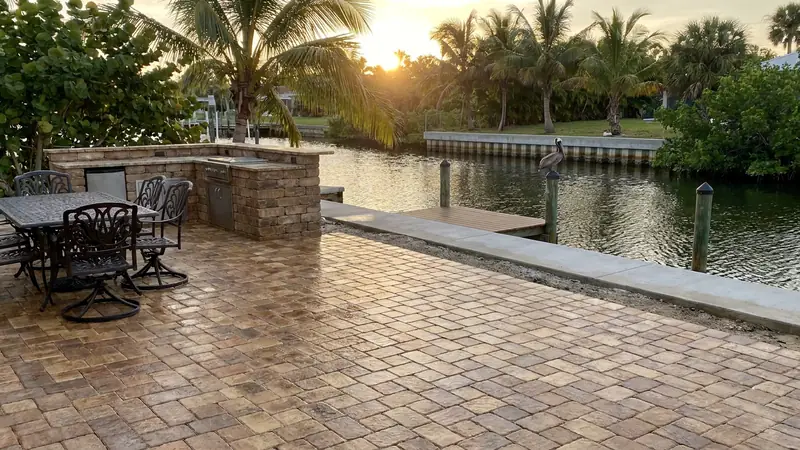
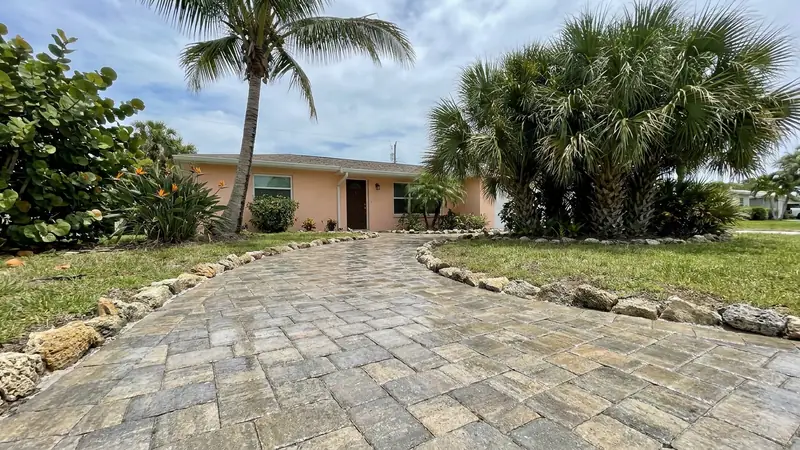
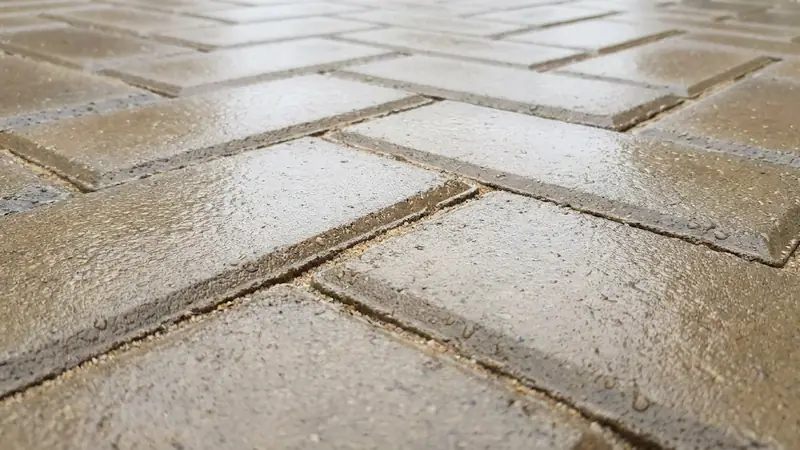
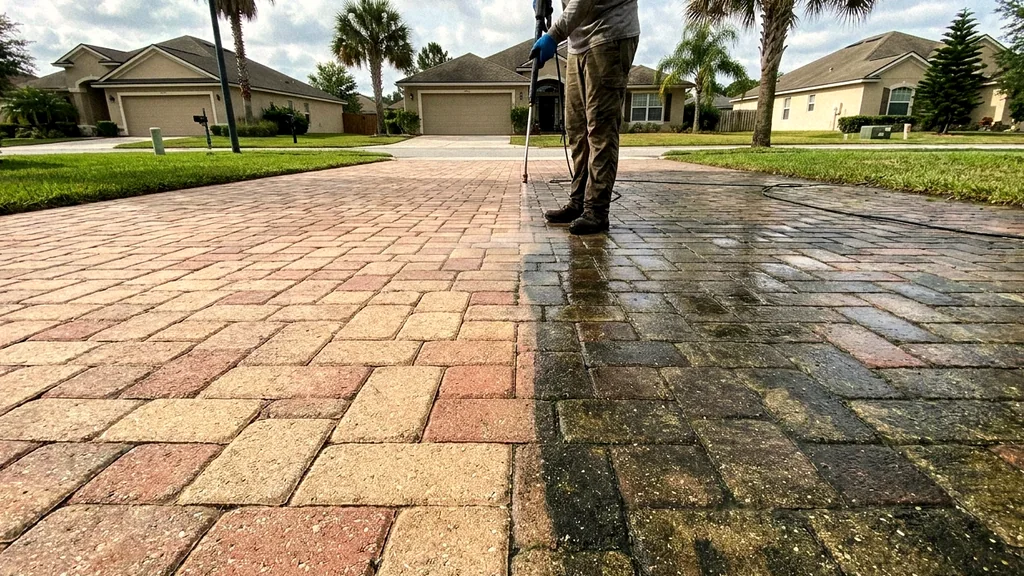
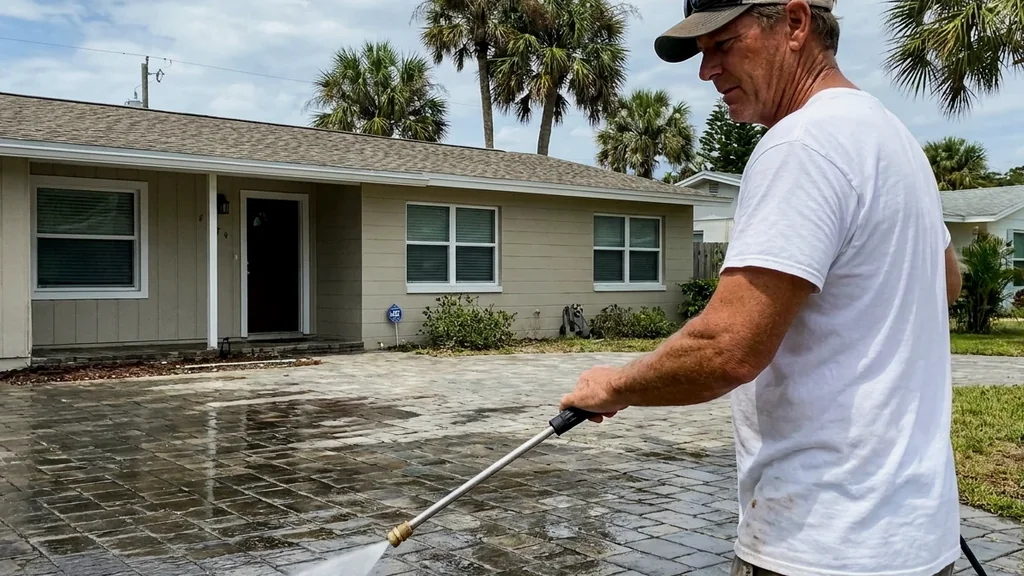
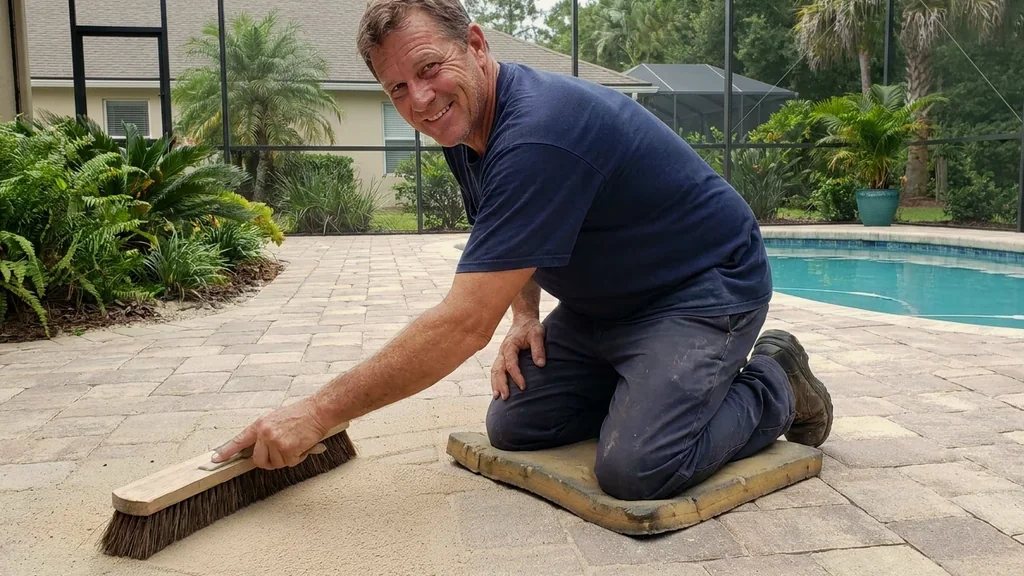
What do restored pavers look like in Satellite Beach?
Frequently Asked Questions
How much should I pay for paver sealing?
A Brevard County paver company publishes $1.85 to $4.00 per square foot to clean, sand and seal, and says condition, sealer type and prep all move the price. A restoration job with stripping or resets costs more than a plain reseal, and nobody can price it fairly without seeing the surface.
Is sealing your pavers worth it?
It can be. Unilock, a paver manufacturer, lists deeper color and easier cleaning as the gains and a fresh coat every three to five years as the cost. On pavers that have already faded, the choice is usually between restoring them once and letting them keep graying.
How often should I seal pavers in Florida?
A Brevard County paver company says every two to three years, and Unilock gives three to five. A South Florida restoration company puts restored pavers at two to three years between maintenance cycles. Sun, traffic and pool splash push the number down.
Is it better to spray or roll paver sealer?
Many crews use both. Unilock suggests a sprayer for an even coat and a dry roller to soak up the extra. On a restoration job the sealer goes onto clean, dry pavers with the old coat already dealt with, so the application is the easy part.
Can I seal my pavers myself?
You can buy sealer, but restoration is where do-it-yourself jobs go wrong. Unilock says to test old and new sealer together before resealing, and a South Florida restoration company says never to seal over failed sealer. A contractor can check compatibility and moisture before a coat goes down.
Can you reseal pavers without stripping the old sealer?
Sometimes. If the old coat is intact and compatible, a clean and reseal can work. If it is white, flaking or peeling, a South Florida restoration company says to strip it first, because sealing over a failed coat locks the problem in.
Why do my sealed pavers in Satellite Beach look white or cloudy?
Trapped moisture is a common cause. Unilock says a whitish film can show up when water is trapped or a second coat goes on too soon, and the same company says new pavers can also show efflorescence for two to three months or up to a year. A contractor looks at the spot to tell the two apart.
How long does a paver restoration take?
A South Florida restoration company puts a patio at one to two days on site and a large driveway at two to three. Add weather days, since sealer needs a dry window.
How soon can someone look at my pavers in Satellite Beach?
A local contractor replies within 1 business day, usually much sooner, after you call (321) 455-5098 or send the short form. The look is free, and the price is yours to accept or turn down.
Ready to bring tired pavers back?
Send the short form or ring the number below. Expect a written reply from a contractor inside 1 business day, often sooner.
Free, no obligation