
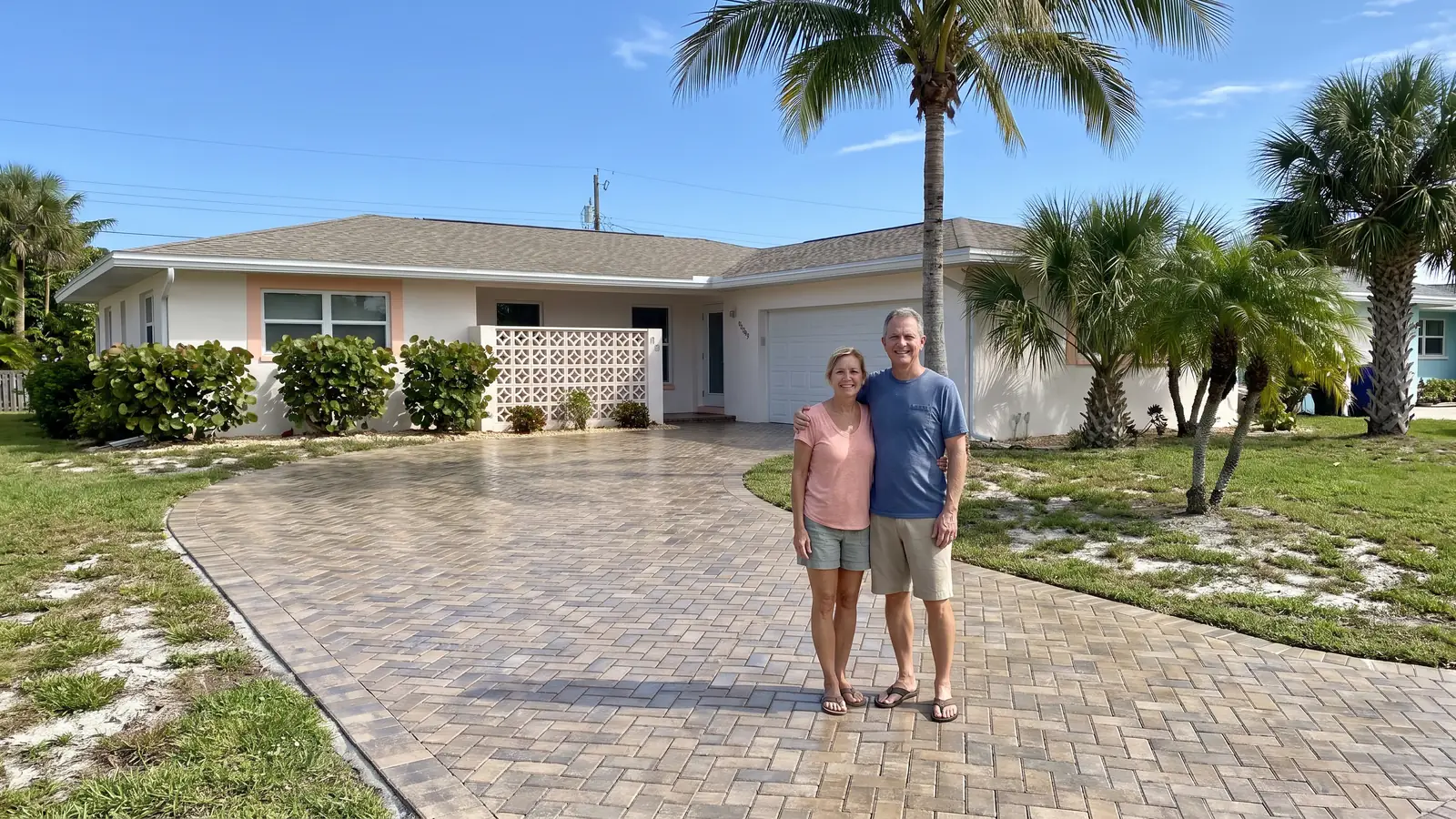
Paver sealing for Vero Beach homes
Paver Sealing in Vero Beach, FL
Vero Beach pavers between the lagoon and the ocean can look fresh again, so call (321) 455-5098 today.
- Brings out deeper paver color
- Fresh joint sand helps lock pavers in place
- Gives weeds less room to grow
- Makes the surface easier to keep clean
- Free estimate, no obligation
Request a Free Estimate
Free, no obligation.
Fast, careful paver sealing in Vero Beach
Need paver sealing in Vero Beach? A free estimate comes first, whether the job is a driveway, a pool deck, a walkway or a patio. The work covers the beach side and the mainland side of the lagoon, and a reply lands within 1 business day, usually much sooner. Start with ask for a free estimate.
Salt that has dried on a pool deck near the ocean leaves pavers chalky, and weeds show up in the joints soon after. After a wash, fresh sand and a new coat, the pavers read as one steady color again. To talk it through first, call (321) 455-5098 and describe the surface. The estimate costs nothing.
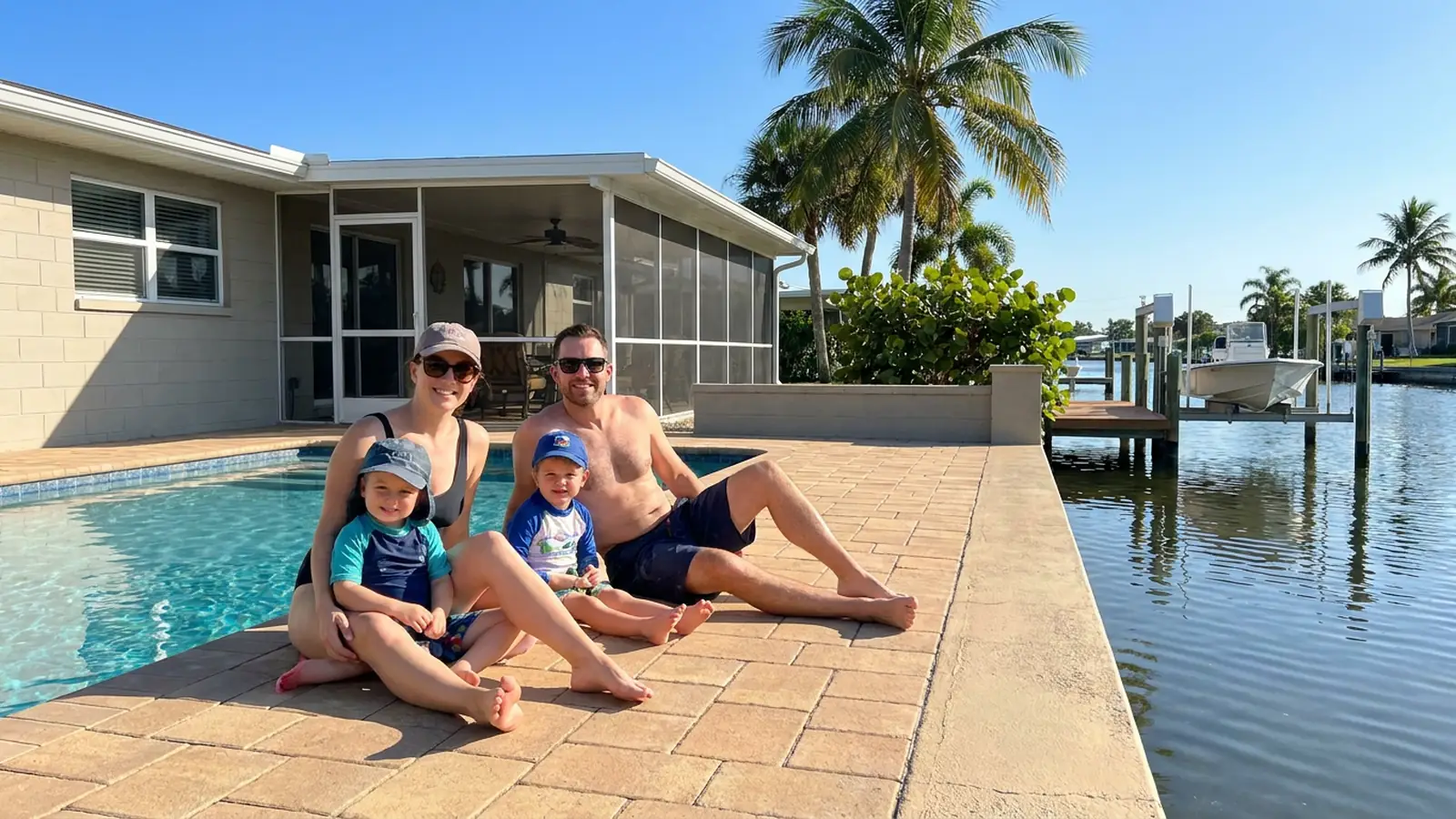
Why hire a local paver sealing contractor in Vero Beach?
Vero Beach sits between the Indian River Lagoon and the Atlantic, so salt, sun and heavy rain all reach the same pavers. To hear how a local contractor plans around that at your address, ask for a free estimate.
Free visit, written price
A contractor comes to your Vero Beach address, measures the pavers and puts a price on paper before anything is agreed.
Check bids against Brevard
Brevard County companies list $1.85 to $4.00 per square foot for a full clean, sand and seal. Vero Beach sits next door to the south, so that range is a useful measuring stick.
Matte or wet look
Matte stays natural next to coastal homes. A wet look deepens the color and shows scuffs sooner on a busy drive.
You set the pace
The day, the finish and the final yes are yours. Asking for an estimate in Vero Beach creates no obligation.
Get Your Free Estimate in Vero Beach
Tell us about your pavers in Vero Beach.
Free, no obligation
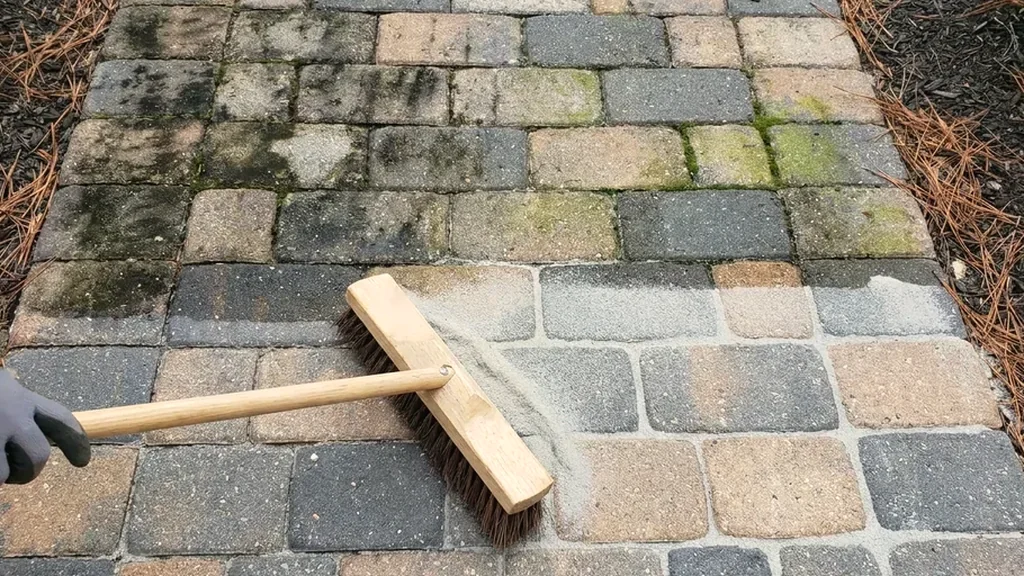
What paver problems show up most in Vero Beach?
Salt air on the barrier island
Vero Beach spans a barrier island, with Ocean Drive and Humiston Park a short walk from the Atlantic. A Brevard County company says salt air and coastal weather speed paver wear, and that beachside properties may need resealing sooner. Pavers close to the water see more of both. Check the joints and the surface more often if you live near the beach. Rinsing salt off with fresh water between coats is a question worth putting to the contractor. A faded or chalky look is a fair sign the coat is working harder than it should. Salt also settles on pool decks and railings, so a rinse with fresh water is part of upkeep.
Shade under live oaks
Live oaks form a canopy over Historic Jungle Trail, and maritime hammock with oaks and ferns still stands at Captain Forster Hammock Preserve. Oaks like these shade a lot of ground. A walkway under old branches stays damp, and damp shaded pavers turn green first. Treatment helps little if the pavers never dry. Oak leaves and small branches also collect in the joints, which holds moisture against the pavers. Leaf litter from live oaks can sit on pavers for days after a windy afternoon.
Rain that moves joint sand
Vero Beach gets about 53.25 inches of rain a year, with September among the wettest months at roughly 7 inches. Heavy rain carries joint sand off a driveway, and open joints widen and let weeds in. Checking the joints each spring shows whether sand has gone missing. Sand is replaced first, and sealer comes after. February averages only about 2.20 inches, so a dry winter week is often the easiest time to book. Sealed joints hold sand better than bare ones through the wet months. A dry stretch in February leaves room for a longer job. September averages roughly 7 inches, so late-summer storms test the joints hardest.
Rust marks from sprinklers
UF/IFAS says iron is high in most Florida well water, and it can streak surfaces orange when sprayed. If your Vero Beach yard waters from a well, look for rust-colored lines where the spray lands on the pavers. Rust is removed before the first coat, since sealer would hold it in. One run of the sprinkler zone beside the pavers will show where the spray lands. Pointing the sprinkler heads at the lawn keeps new streaks from appearing. Rust marks near the edge of the pavers often trace back to a single sprinkler head.
Coats from earlier owners
Vero was chartered in 1919, and many of its streets have seen several owners and several paver jobs. An earlier owner may have picked a sealer that went unrecorded. That is a problem, since a water-based sealer cannot go over a solvent-based sealer. The contractor learns what is there, and only then chooses a new product. Keeping any old receipt or product name saves time at the first visit. A surface that is peeling or patchy hints that the old product needs attention first.
Does paver sealing differ between the island and the Vero Beach mainland?
Does the island differ from the mainland?
Yes, mostly because of salt air and storm water. Vero Beach has barrier island and mainland parts, linked by bridges such as the 17th Street Bridge, which opened in 1979. Beachside pavers get more coastal air, and one Brevard County company says beachside properties may need resealing sooner. Tell the contractor which side of the lagoon you are on when you ask for a free estimate.
What happens near Ocean Drive and the beach?
Ocean Drive runs through the Central Beach Business District, where Humiston Park is one of the city's three main public beaches. Homes and condos near there sit closest to wind and salt. Mention how near you are to the water, since that shapes how often a coat should be checked. Call (321) 455-5098 and give the contractor your street.
How do the older mainland streets differ?
On the mainland side, the Osceola Park Historic Residential District is listed on the National Register of Historic Places. Older streets mean older houses and older paver jobs, with unknown coats under them. Ask the city whether your address has any exterior rules before you book. Once you know, ask for a free estimate and share what you learned.
Does the lagoon shape your lot?
Indian River County covers 617 square miles, and the lagoon that gave it its name runs through the eastern part. That water shapes drainage and humidity for homes on both sides of the bridges. Pavers that sit low near the shore can stay wet longer after a storm. When you ask for a free estimate, mention whether your lot slopes toward the water.
What does paver sealing cost in Vero Beach?
How should you read the Brevard range?
Published Brevard County rates run $1.85 to $4.00 per square foot for the full clean, sand and seal. Vero Beach is in Indian River County, next door to the south, so read that range as a guide, not a quote. Extra area from a pool deck, a long drive or a walk adds to the total. For a figure for your property, ask for a free estimate; the estimate is free.
What changes the plan on your lot?
Your location can change the plan. A beachside lot may need closer checks for salt wear. A shaded walk may need extra cleaning, and old sprinkler rust is one more step. Call (321) 455-5098 and the contractor will say which apply to you.
| Paved area | Typical example | Clean, sand and seal |
|---|---|---|
| 300 sq ft | Small patio or walkway | $555 to $1,200 |
| 600 sq ft | Two car driveway | $1,110 to $2,400 |
| 1,000 sq ft | Large driveway or pool deck | $1,850 to $4,000 |
| 1,500 sq ft | Driveway plus pool deck | $2,775 to $6,000 |
Math based on the $1.85 to $4.00 per square foot that Space Coast paver companies publish. Your contractor sets the actual price after seeing the surface. Repairs, leveling and stripping failed sealer are usually extra.
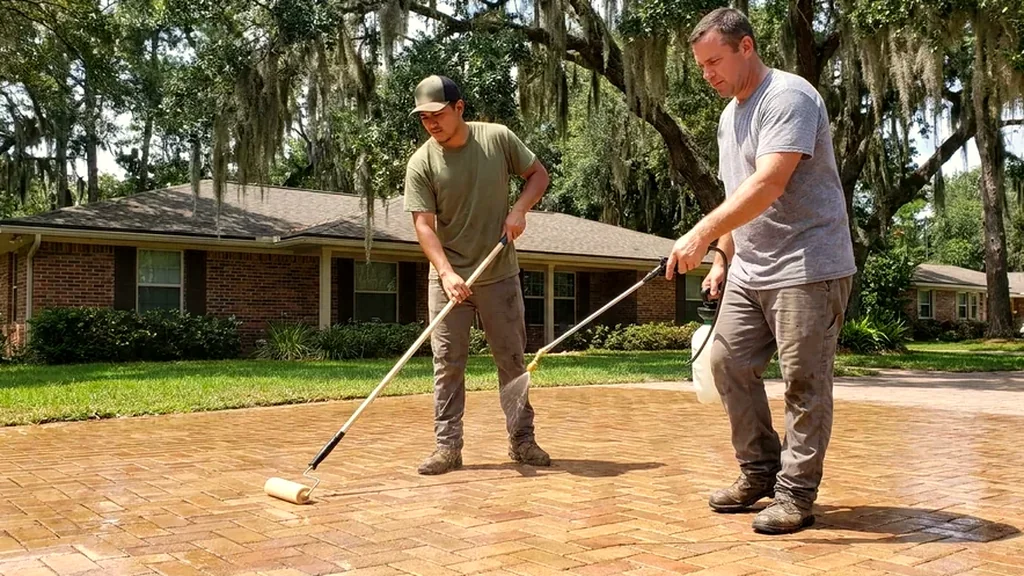
How does a paver sealing job work in Vero Beach?
Walk the lot, note the coast
The visit covers how water drains, where oaks or walls throw shade and how near the beach you are. Sunken or lifted pavers are reset first, since a coat would hold the dip in place. If the surface was sealed before, the product matters, because water-based sealer will not bond over solvent-based. Each area is measured, because square footage sets the price, and garage aprons and pool edges are counted separately.
Wash and treat stains
A Brevard company describes washing in three parts: a pretreat, a surface clean with a rinse, and an efflorescence treatment. Near the coast that also carries off salt residue, plus the green film from shaded walks and the rust left by sprinklers. Rinse water is kept off shrubs, siding and the garage door where possible. Anything left on the surface ends up under the coat, so this stage is not rushed. Sand that stays put keeps the joints from widening, which is how weeds get their start, so the contractor treats this step as protection and not decoration.
Refill the joints
Washing pulls out the old joint sand, so new sand goes in before the coat. Joints left empty collect soil, and weeds take root. Sand that has gone dark or crusty is swept out first, and fresh sand is swept in until it sits level with the paver faces. The edges by the street and the garage get a second look.
Wait for a dry day
Sealer needs dry pavers underneath. The wet season here lasts roughly 138 days, so the plan bends around the forecast. A Brevard company says September through May brings less rain and lower humidity. A paver can feel dry on top while the joints stay wet, which is why patience matters. A rainy week can push the date back, and a good contractor says so up front instead of rushing a coat onto damp pavers.
Seal and set the finish
Two coats go on in the finish you picked. Glossy surfaces scuff sooner than matte, and that counts on a drive that sees tires every day. Ask what will cover the garage door, siding and plants during the work. Typical quotes put the next coat two to five years out, and one Brevard company advises keeping cars off for 72 hours. Ask which finish suits the house and how the edges will be masked. A clear answer here tells you how careful the rest of the job will be.
Complete paver services in Vero Beach
What does the first visit cover?
Every Vero Beach job starts with a walk around the property to see how close the pavers sit to the water. Washing and stain treatment follow, then new joint sand, and the sealer goes on once everything is dry. For the time each stage takes at your address, call (321) 455-5098.
How does each surface get its own plan?
Tell the contractor about every paved area when you ask for a free estimate. Walks under old oaks stay shaded and turn green first. Pool decks face chlorine, constant moisture and strong sun, a Brevard company notes, and driveways take the tires. Each gets a plan built around what it faces.
How do you pick a sealer and a finish?
Choosing a sealer takes two decisions. The old coat decides water-based or solvent-based, because the two will not bond. Then comes matte for a natural look or a wet look that deepens color near the beach. Call (321) 455-5098 to compare finishes.
How does rain move the date?
Most of the year's rain arrives in a wet season of about four and a half months, so a sealing date can slip. Shaded walks stay damp long after a sunny driveway has dried. Crews generally wait for dry pavers, which is why a flexible calendar helps. To find a day that fits your week, ask for a free estimate.
Questions to ask before you hire
- Will you find sunken pavers and fix them before sealing?
- Do you seal a pool deck any differently than a driveway?
- Will you tell me the square footage and the price per square foot before you start?
- How many days do I stay off the pavers, and when can the cars come back?
- Can you finish with a matte look instead of a wet shine?
- What do you use to lift rust marks from well water off my pavers?
- Does your sealer hold up to salt air and sprinkler water near the coast?
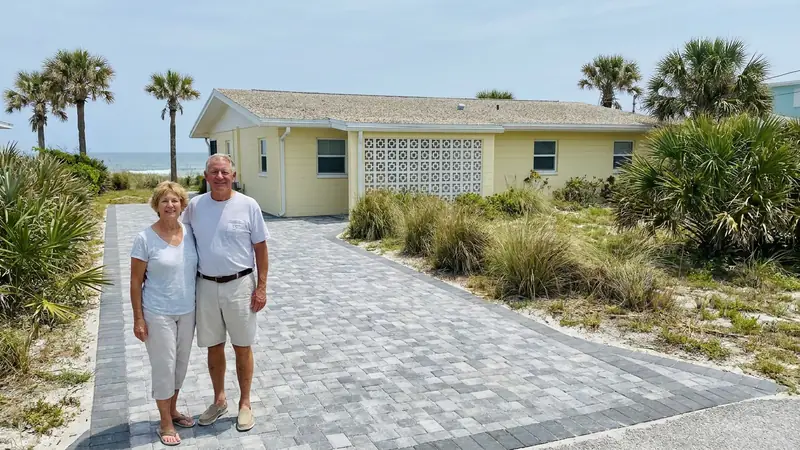
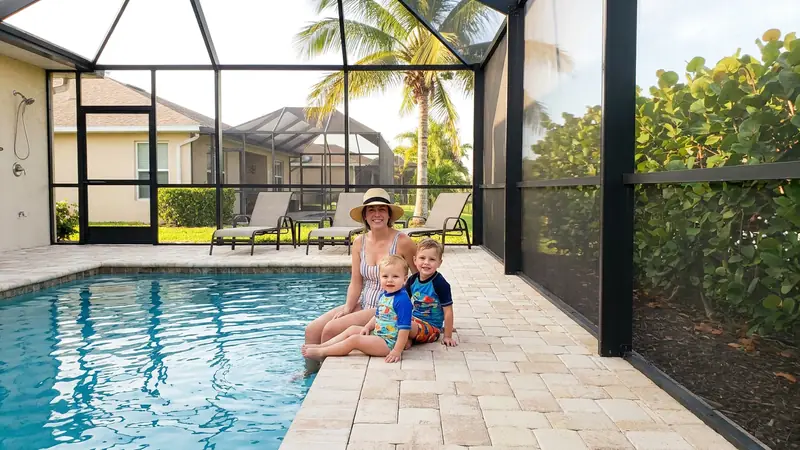
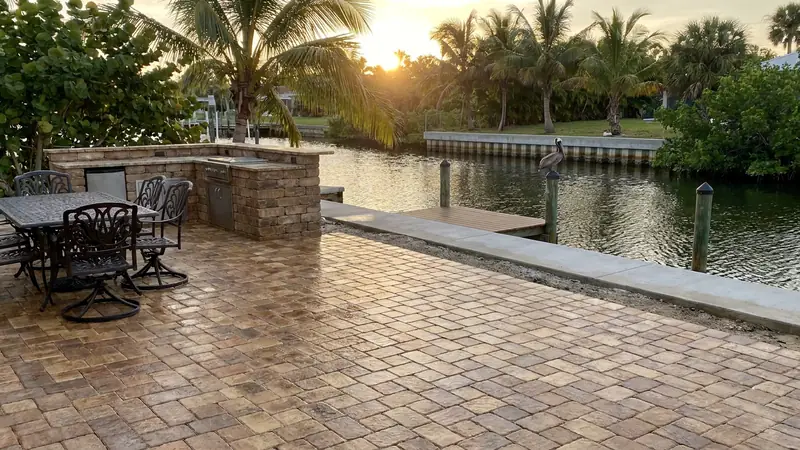
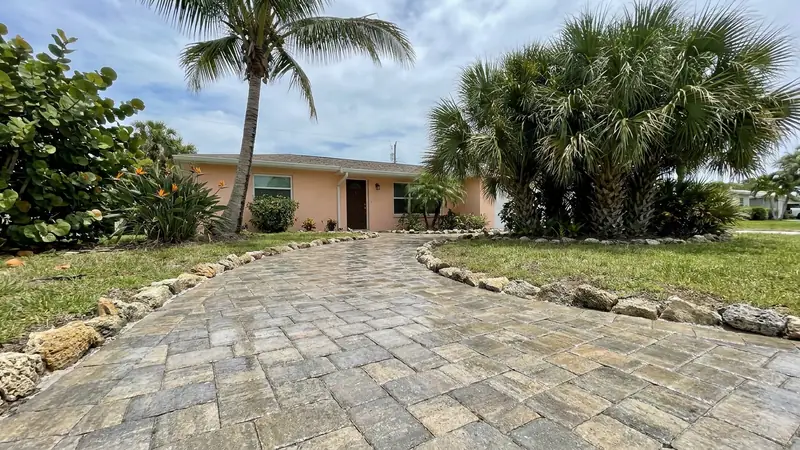
What do sealed pavers look like around Vero Beach?
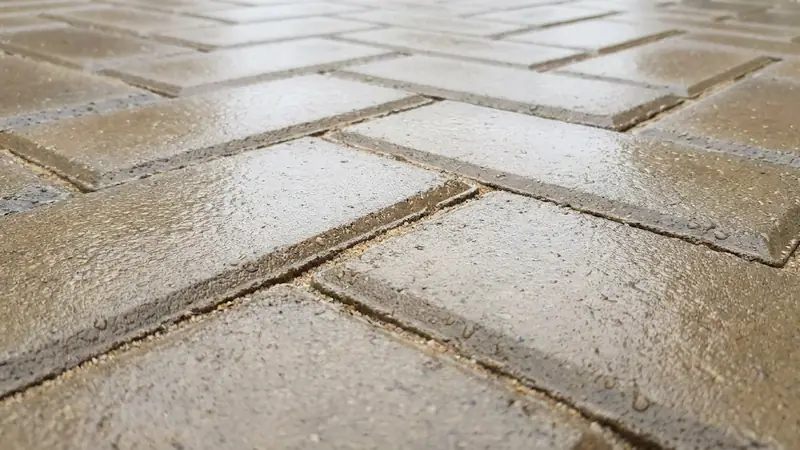
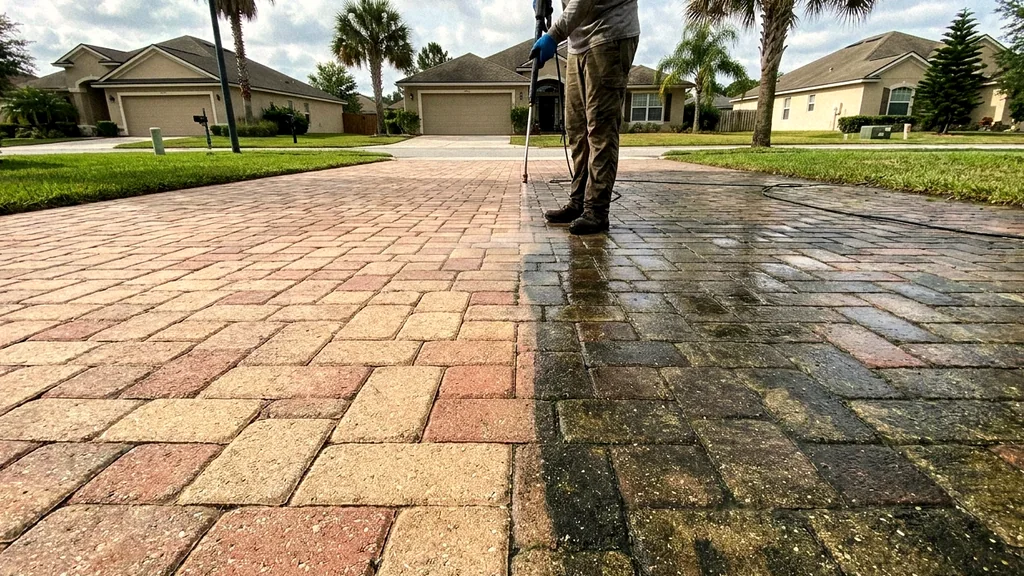
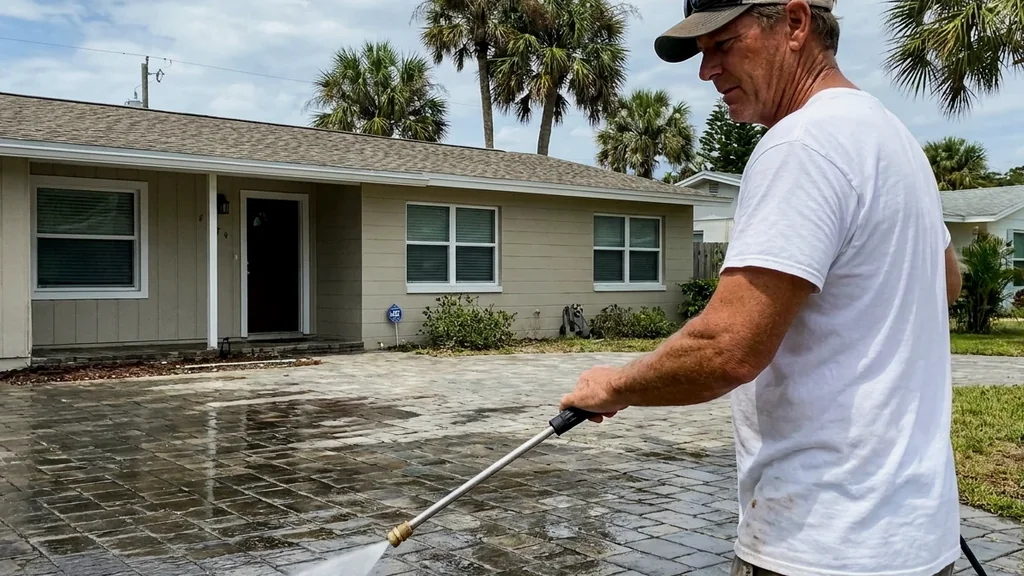
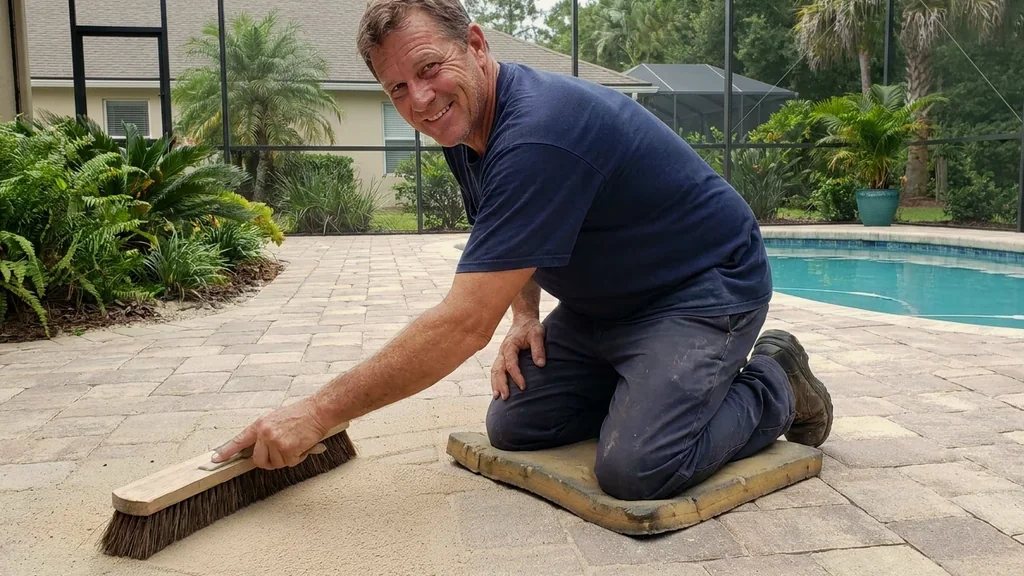
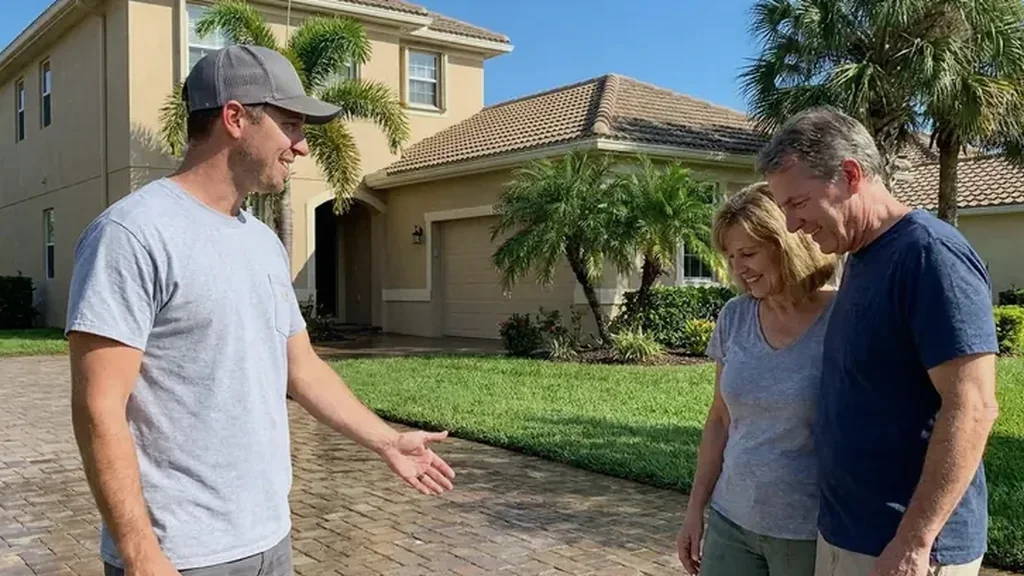
Why local matters in Vero Beach
Why do the two sides of the lagoon matter?
Pavers behave differently on the two sides of the lagoon, and a contractor who works Vero Beach plans for both. Salt is the worry near the ocean, while shade and dampness are the worry under the oaks. Knowing your side gives the first plan. Call (321) 455-5098 to reach someone who works this coast.
How does a long wet season shape the calendar?
Around 53 inches of rain fall in a year, and a good share arrives in one long wet season. A local crew keeps slack in the calendar for that. Ask through ask for a free estimate what happens when a storm cancels your day.
Why ask about the age of the house?
Older streets carry older paver jobs, sometimes with more than one coat under the surface. A contractor from here asks about that before choosing a product. Bridges and island roads also shape how sand and equipment reach a job. If this sounds like your place, ask for a free estimate and give the age of your house.
How did Vero Beach grow, and what is left of the old town?
When did Vero Beach start?
Vero Beach grew from a small town chartered on June 10, 1919, with 71 residents. It was renamed Vero Beach on May 19, 1925, the year it became the county seat of the new Indian River County. Its population grew from 793 in 1920 to 2,268 in 1930. If you live near the old downtown, ask for a free estimate.
Which old buildings still stand?
Some of that history still stands. The Vero Beach Historical Society uses a restored 1903 train station, and Hallstrom House dates to 1918. Jungle Trail, built in the 1920s as the first county road on the barrier island, still runs under live oaks. If you live near one of these sites, call (321) 455-5098 and share your street name.
How did the bridges change the island?
The Barber Bridge linked the mainland to the barrier islands in 1951 and was replaced in 1995. The A1A bridge over Sebastian Inlet opened in 1965, and the 17th Street Bridge followed in 1979. Those crossings still decide how crews and materials reach an island lot. If you live on the island side, call (321) 455-5098 and say which bridge you use.
What does Dodgertown tell you about older lots?
Dodgertown began as a World War II naval air station and served as the Dodgers' spring training site until 2008. The Osceola Park Historic Residential District, the Vero Railroad Station and McKee Jungle Gardens are also on the National Register of Historic Places. A home near one of them is working with an older lot. If that is you, ask for a free estimate and share the age of the house.
What does Jungle Trail say about shade?
Historic Jungle Trail is an 8-mile unpaved road with a 15 mph speed limit, built so citrus growers could ship fruit from docks on the Indian River. Live oaks form a canopy over the lane between Wabasso Beach Road and Pelican Island. Homes near it sit under that same shade. Call (321) 455-5098 and ask how shade changes the plan for your walk.
Frequently Asked Questions
How often do Vero Beach pavers need a new coat of sealer?
One Brevard company puts the span at two to three years, and quotes elsewhere reach five. Pavers near the beach may need a look sooner, since salt air and sun speed wear. A spring check of the joints shows whether sand has gone missing.
What does it cost to seal pavers in Vero Beach?
Brevard County companies list $1.85 to $4.00 per square foot to clean, sand and seal. Vero Beach sits next door to the south, so use that as a yardstick. A pool deck, a long walk or a wide drive adds area, and a small patio trims the total. Get the area in writing so two bids line up.
Can you seal outdoor pavers in Vero Beach?
Yes, driveways, pool decks, walkways and patios are all sealed. A Brevard company points to Florida's sun and weather as the reason. The surface has to be clean and dry, and the old coat decides which sealer can go on. A free estimate from a local contractor will confirm what suits your surface.
Should you seal pavers after power washing in Vero Beach?
Yes, the wash comes first and sealing follows once the pavers are dry. Washing removes joint sand, so fresh sand goes in before the sealer. A Brevard company lists cleaning, an efflorescence treatment, sanding and two coats, in that order. Pavers that look dry on top can still hold water in the joints, so patience matters.
Does salt air change how often Vero Beach pavers need sealing?
It can. A Brevard company says beachside properties may need resealing sooner than the usual two to three years. Pavers farther from the water see less salt but still get sun and rain. Ask the contractor to check the coat each spring if you live near the beach.
Is there a catch to sealing pavers in Vero Beach?
Sealer has to be renewed, so upkeep is the catch. A wet look scuffs before matte does, and the pavers must be dry to take a coat. A long wet season can push the date back. Ask what upkeep the finish needs before you agree to a day.
Will new sealer stick over an old coat on Vero Beach pavers?
Not always, because water-based sealer will not bond to a solvent-based coat. First the contractor learns what the old coat is, and only then picks a product. An old receipt or product name helps, and a small test spot can guide the choice if nobody knows.
When can I park on sealed pavers in Vero Beach?
One Brevard company recommends waiting 72 hours before driving on them. Foot traffic comes sooner, and cure time shifts with the sealer and the weather. Decide now where the cars will go, and keep pets off until the surface is ready.
Do live oaks near my Vero Beach driveway make pavers turn green?
Often, yes. Oaks shade the ground and drop leaves into the joints, so the pavers stay damp, and damp shaded pavers turn green first. A landscaping guide says treatment helps little where pavers never dry out. A wash clears the film, and sweeping the leaves away slows its return.
Why do my Vero Beach pavers have orange streaks near the lawn?
UF/IFAS says iron is high in most Florida well water, and irrigation spray can leave orange streaks on whatever it touches. If your yard waters from a well, check where the spray lands. Rust is treated before sealing, because a coat would trap it.
Which months suit paver sealing in Vero Beach?
A Brevard company calls September through May the most suitable stretch. February is the driest month here at roughly 2.20 inches of rain, which makes late winter an easy time to book. Summer storms can still move a date, so keep a spare day open.
Ready for a Free Estimate in Vero Beach?
Call (321) 455-5098 and tell us about your pavers.
Free, no obligation