
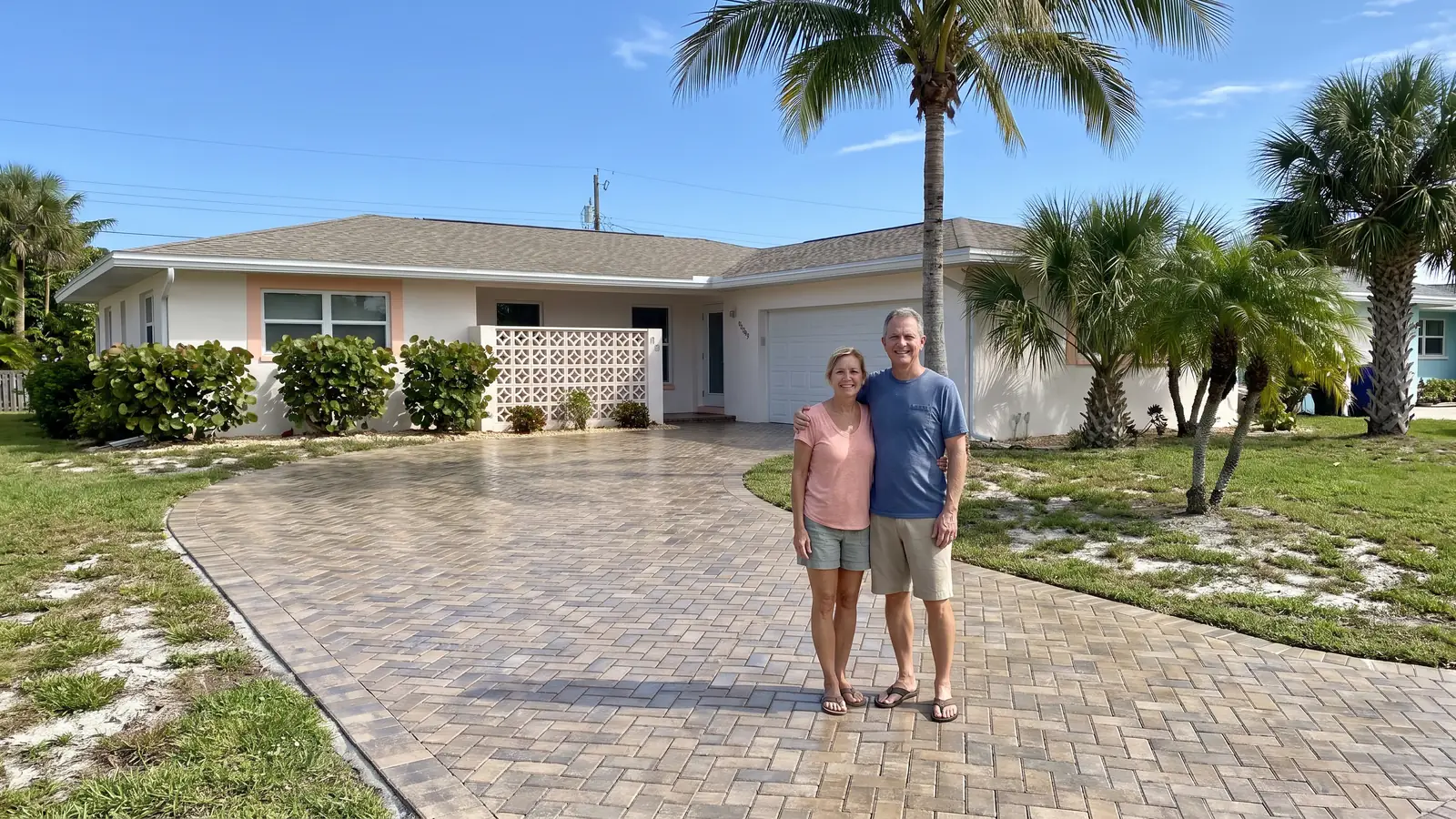
Paver sealing for Palm Bay homes
Paver Sealing in Palm Bay, FL
Pavers on a Palm Bay quarter-acre lot can look clean and even again, so call (321) 455-5098 for a free estimate.
- Brings out deeper paver color
- Fresh joint sand helps lock pavers in place
- Gives weeds less room to grow
- Makes the surface easier to keep clean
- Free estimate, no obligation
Request a Free Estimate
Free, no obligation.
Fast, careful paver sealing in Palm Bay
Paver sealing in Palm Bay comes with a free estimate for driveways, walkways, lanais and pool decks. The contractor washes, re-sands and seals pavers on streets across the city, from Malabar Road to the Turkey Creek side. To get started, ask for a free estimate, and a reply comes within 1 business day, usually much sooner.
Imagine a long driveway on a wide lot, the color gone flat and a thin line of weeds along every joint. A wash, new sand and a fresh coat bring it back to one even shade from garage to curb. To talk it through first, call (321) 455-5098 and describe the pavers you have. The estimate is free.
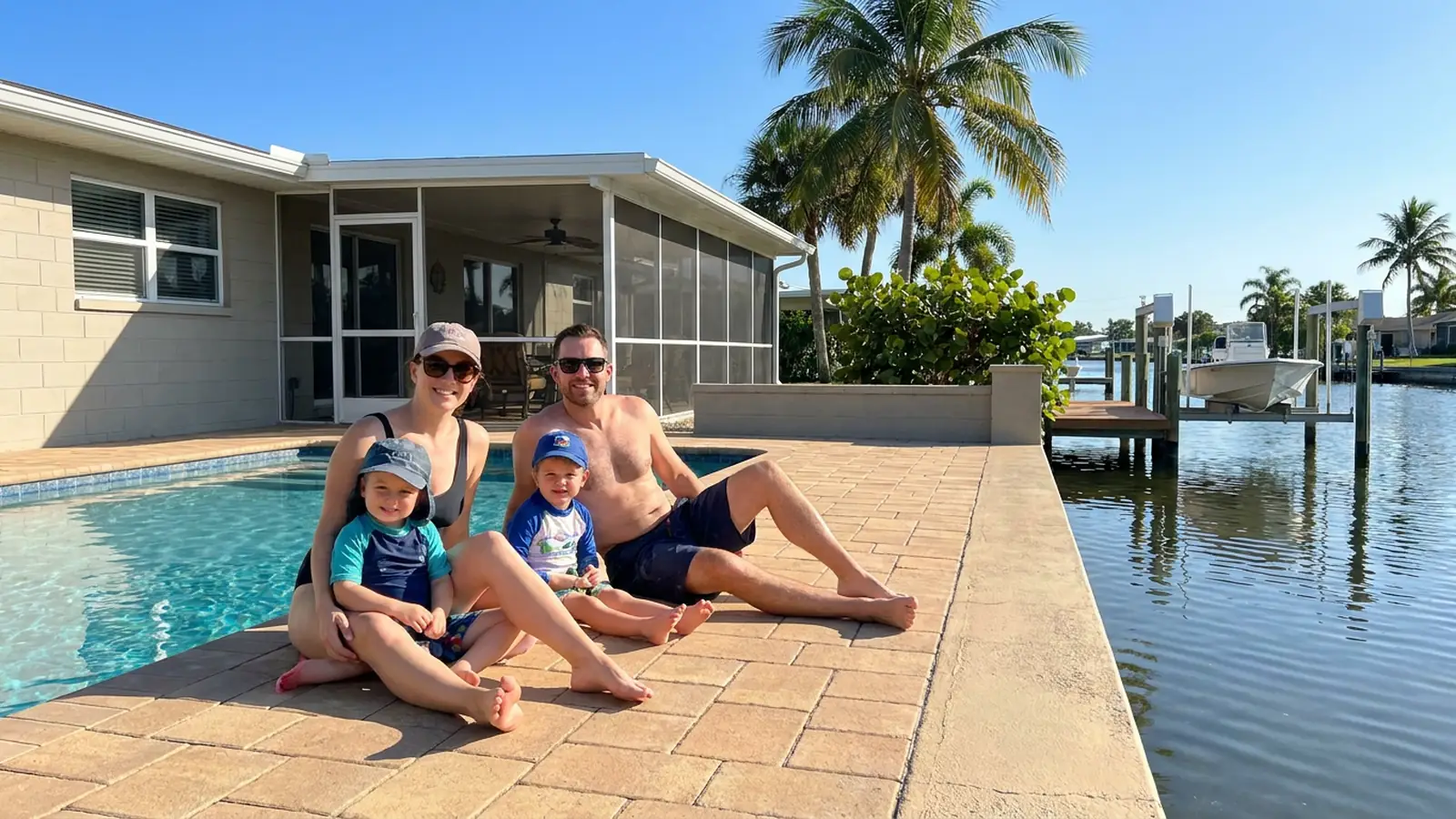
Why hire a local paver sealing contractor in Palm Bay?
Palm Bay covers more land than any other city in Brevard County, and its streets were laid out on a grid of big lots and drainage canals. To hear how that shapes a paver job at your address, ask for a free estimate.
Quote before anything starts
The contractor measures your Palm Bay drive, lanai or walk and names a price first. You agree, or you do not.
Check the number
The going Brevard rate is $1.85 to $4.00 per square foot. See where your Palm Bay quote lands.
Plain front, plain finish
Matte looks natural on a plain front. A wet look brings out color and shows scuffs sooner on a busy drive.
No pressure
You choose the date and the finish. A Palm Bay estimate carries no obligation, so you can compare and decide.
Get Your Free Estimate in Palm Bay
Tell us about your pavers in Palm Bay.
Free, no obligation
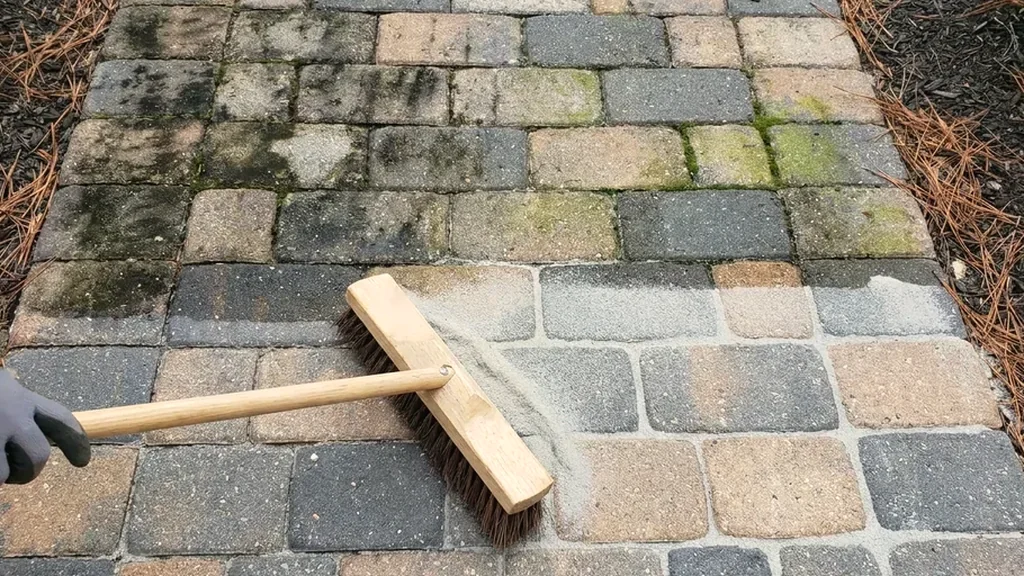
What paver problems show up most in Palm Bay?
Rain on a flat, drained grid
Palm Bay was drained with a grid of about 180 miles of canals, and it averages 55.55 inches of rain a year. That is a flat, wet setting. Rain that runs across a driveway carries joint sand toward the street, and joints that lose sand widen and let weeds in. Sand goes back into the joints before anything else. A look at where water exits your lot shows where sand tends to disappear. Sandy joints that stay full are what keep a driveway tight through a wet summer. Wide lots mean long runs of pavement for that water to cross.
Coats from earlier owners
The oldest General Development homes date from the 1960s through the 1980s, so many have changed hands more than once. A previous owner may have used a sealer that was never noted. A water-based sealer applied over a solvent-based coat will not bond properly. Sorting out what is already there comes before choosing a new coat. A receipt or product label from an old job shortens the first visit. Flaking or uneven areas hint that the old sealer needs work before a new coat. The oldest Palm Bay homes date from the 1960s through the 1980s, so there is plenty of history to sort through.
Rust marks from sprinklers
A Palm Bay lot is often large, so a big lawn means a lot of spray near the pavers. UF/IFAS reports that most Florida well water is rich in iron, and iron in spray leaves orange streaks. Rust-colored lines get treated before sealing, since sealer would lock them in. Watching the sprinklers run once shows whether any spray lands on the driveway. Aiming the heads away from the driveway helps keep new ones from forming.
Green film near water and shade
Lots that back onto one of the old canals, or sit near Turkey Creek, stay damp. Shaded and wet pavers pick up green film, and treatment helps little where they never dry. The shaded side of the house is usually where it starts. Expect to see it along the edges first. Lots that back onto a canal can have damp ground behind the house too, so the lanai gets a look.
More paver than you expect
General Development platted about 70,000 quarter-acre lots, and that much land leaves room for a long drive, a back lanai and a pool deck. The square footage of paver on one Palm Bay lot can add up fast. Price is set per square foot, so it helps to know your area before you call. A tape measure and a rough sketch of the drive, walk and deck make a first quote faster. A bigger area also means a longer day of work, which can affect how the job is scheduled. Walking the lot with a measuring wheel or a phone app gives a fair first number. On a lot this size, one section of pavers may sit in sun while another stays shaded behind the house. Pavers added in different years on one lot can need different amounts of cleaning, which the walk-through shows.
Is paver sealing different on an old Port Malabar street than in newer Palm Bay?
Yes, mostly because of age and lot size. Palm Bay's first big wave of homes came from General Development Corporation, which bought and platted Port Malabar in 1959. Its oldest homes, built from the 1960s through the 1980s, are generally smaller than newer ones, and pavers beside them were usually added by later owners. Name your part of town when you ask for a free estimate, so the contractor knows the street.
General Development platted about 70,000 quarter-acre lots after buying another 40,552 acres in 1961, according to one travel history. A quarter acre leaves room for a long driveway, a back patio and a pool deck, so the paver area on one lot can be large. Measure what you have, because a smaller patio and a long drive price differently. Call (321) 455-5098 with your rough measurements and the contractor can talk through what to expect.
Palm Bay is also big. Wikipedia says it covers more land than any other city in Brevard County, and Malabar Road runs through its center with City Hall along it. The original town sits where Turkey Creek meets the Indian River Lagoon, far from the western streets. Give your street name when you ask for a free estimate, since Palm Bay covers a lot of ground.
What does paver sealing cost in Palm Bay?
Brevard price lists put cleaning, sanding and sealing at $1.85 to $4.00 per square foot. In Palm Bay, lot size matters most, because a long drive plus a lanai and pool deck means a large total area. Old coats, rust and missing sand move the rate inside that range. To see a figure for your own lot, ask for a free estimate; the estimate is free.
Condition changes the quote too. Pavers that were never sealed are simpler than ones with a patchy old coat that needs attention first. Rust marks add a step. Phone (321) 455-5098 and the contractor can say which of these fit your address.
| Paved area | Typical example | Clean, sand and seal |
|---|---|---|
| 300 sq ft | Small patio or walkway | $555 to $1,200 |
| 600 sq ft | Two car driveway | $1,110 to $2,400 |
| 1,000 sq ft | Large driveway or pool deck | $1,850 to $4,000 |
| 1,500 sq ft | Driveway plus pool deck | $2,775 to $6,000 |
Math based on the $1.85 to $4.00 per square foot that Space Coast paver companies publish. Your contractor sets the actual price after seeing the surface. Repairs, leveling and stripping failed sealer are usually extra.
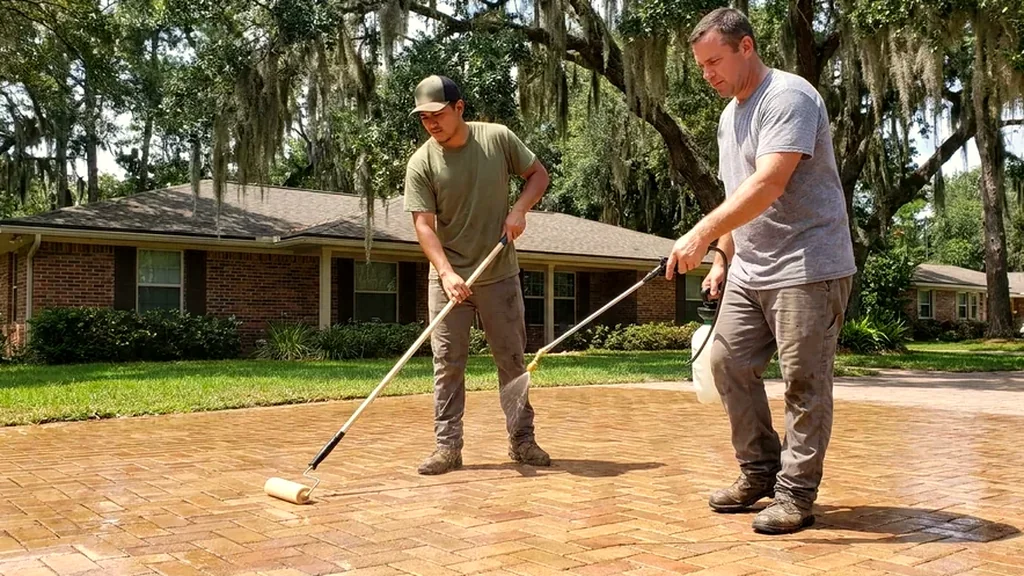
How does a paver sealing job work in Palm Bay?
Measure and check for old sealer
The contractor walks the drive, walkway and any lanai or deck to get square footage. Pavers that have sunk or lifted are reset first, since a coat would preserve the dip. If a sealer is already down, its type matters, as a water-based product will not hold over a solvent-based one. Tell the contractor anything you know about an earlier coat. On a wide lot the contractor also notes where the hose, water and sand will be set up.
Clean and treat stains
Palm Bay's damp corners and sprinkler rust meet a three-part cleaning: a pretreat, a surface clean and rinse, then an efflorescence treatment, according to one Brevard company. White efflorescence can show on pavers, so the stage gets its time. Rinse water is steered away from shrubs, siding and the garage where possible.
Refill the joints
The wash takes joint sand with it, so new sand is added before the coat. Empty joints take in soil, and soil feeds weeds. A full joint locks out soil, while a low one lets it settle in. On a large Palm Bay driveway this step can fill a good part of the day. Edges along the curb and the garage apron tend to lose sand first. On a big lot the edges beside the road and the garage lose sand first, so they get a second look.
Wait for dry pavers
Sealer needs a dry surface. The National Weather Service puts nearly two thirds of the year's rain in a wet season of about 138 days, so the forecast gets a look first. A Brevard company names September through May as the stretch with lower humidity and less rain. Joints can stay wet under a surface that looks dry.
Apply the coats
The same company lists two coats of sealer. A glossy finish scuffs sooner than matte, which counts on a drive that sees tires every day. Many quotes place the next coat somewhere between two and five years out. Ask how the garage door, siding and shrubs will be shielded from overspray, and confirm how long cars should stay off. Lanais and pool decks get the same coats as the drive. Long drives and wide yards mean more material on the truck and more time on each coat.
Complete paver services in Palm Bay
Palm Bay jobs run in sequence: measure, clean, treat stains, re-sand, let the surface dry, then seal. The wash lifts green film and sprinkler rust, and new sand fills the joints. The sealer goes on last so no dirt hides beneath it. For the length of each stage on a big lot, call (321) 455-5098.
Long driveways take tires and afternoon sun. Back lanais and pool decks see wet feet and dragged furniture, while side walks stay shaded and damp. Each surface wears in its own way, and each may need its own plan. Tell the contractor what you have when you ask for a free estimate.
Choosing a sealer means picking water-based or solvent-based, then matte or wet look. An existing solvent-based coat rules out a water-based product. A matte finish suits a plain front, while a wet look brings out color. To work through the choice for your Palm Bay home, call (321) 455-5098.
The wet season around Palm Bay runs about 138 days, so dates can move. A shaded walk may stay damp well after a sunny drive has dried. Contractors generally wait for a dry surface instead of sealing over moisture, and drier months leave more open days. For a date that fits your week, ask for a free estimate.
Questions to ask before you hire
- Do you protect my screen enclosure and garage door from overspray?
- What do you use to lift rust marks from well water off my pavers?
- Can you finish with a matte look instead of a wet shine?
- Does your sealer hold up to salt air and sprinkler water near the coast?
- What happens if an afternoon storm rolls in right after you seal?
- Will you cover my plants and shrubs before you spray?
- How do you deal with the white haze that can show up under a sealer?
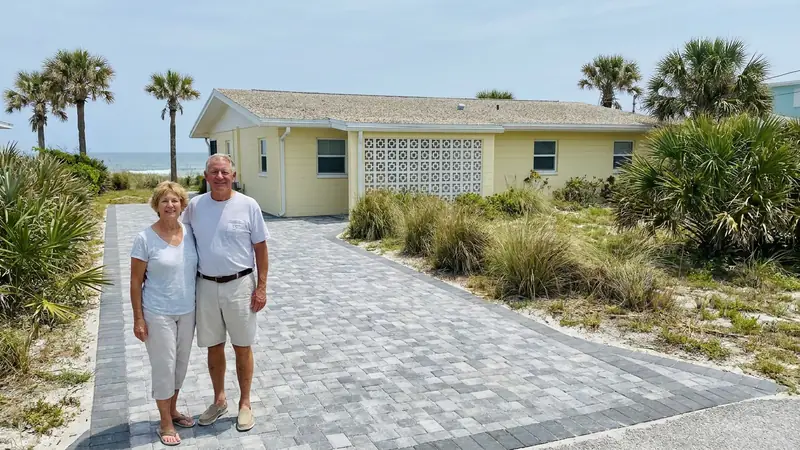
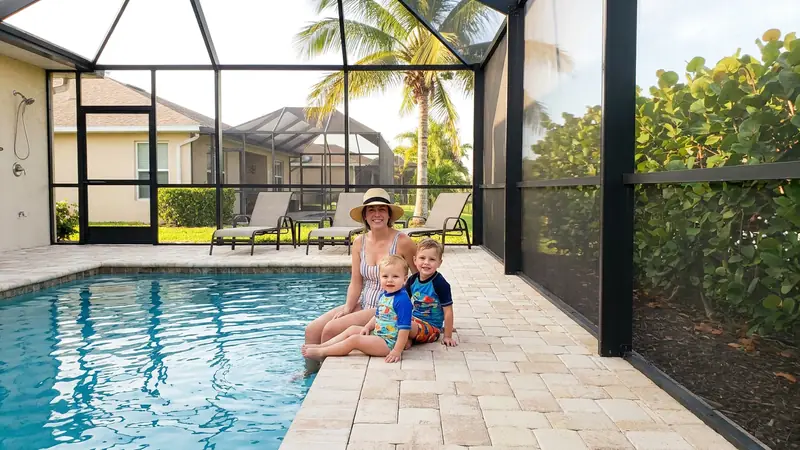
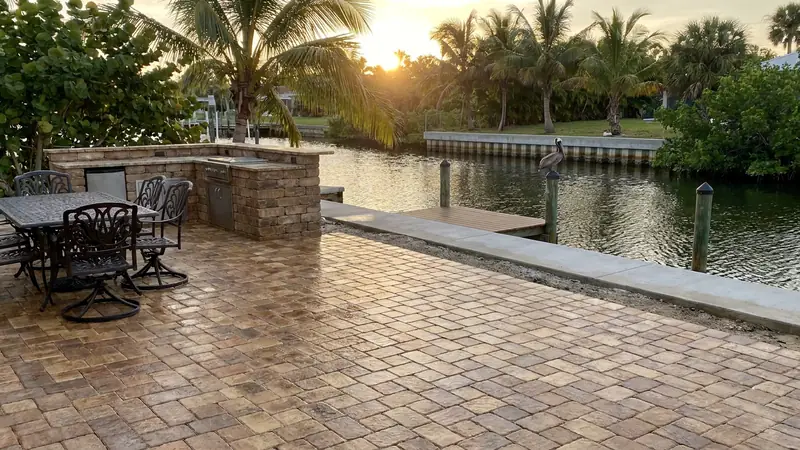
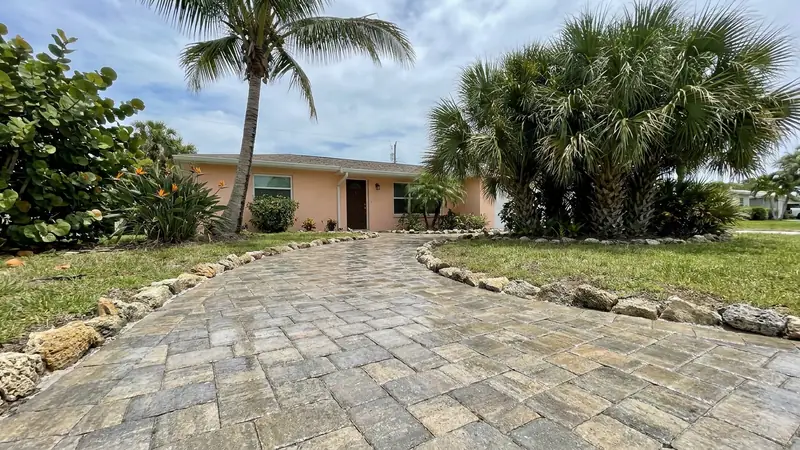
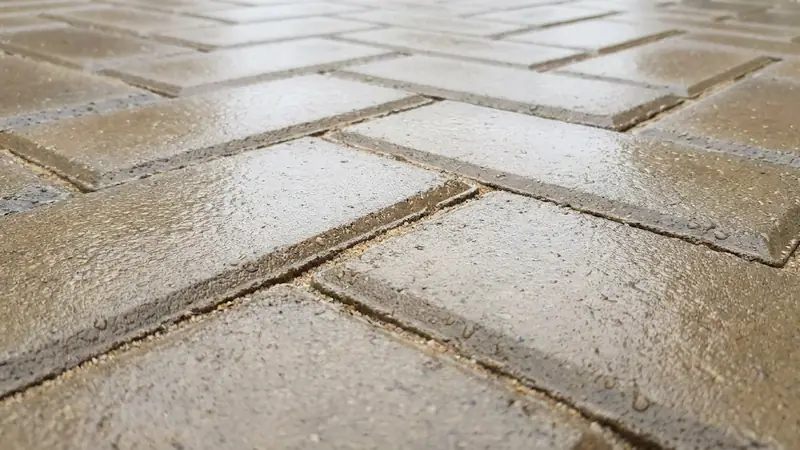
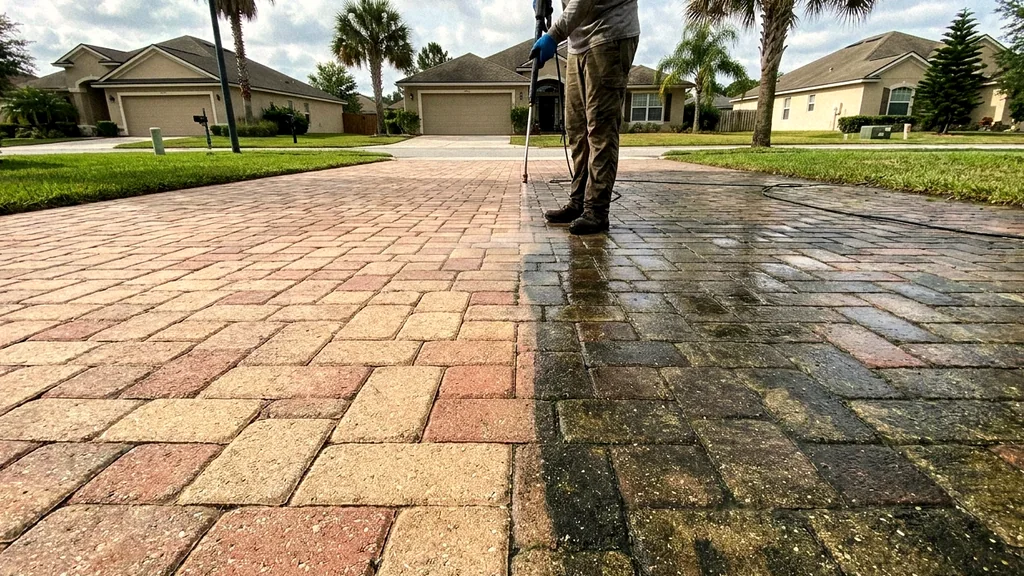
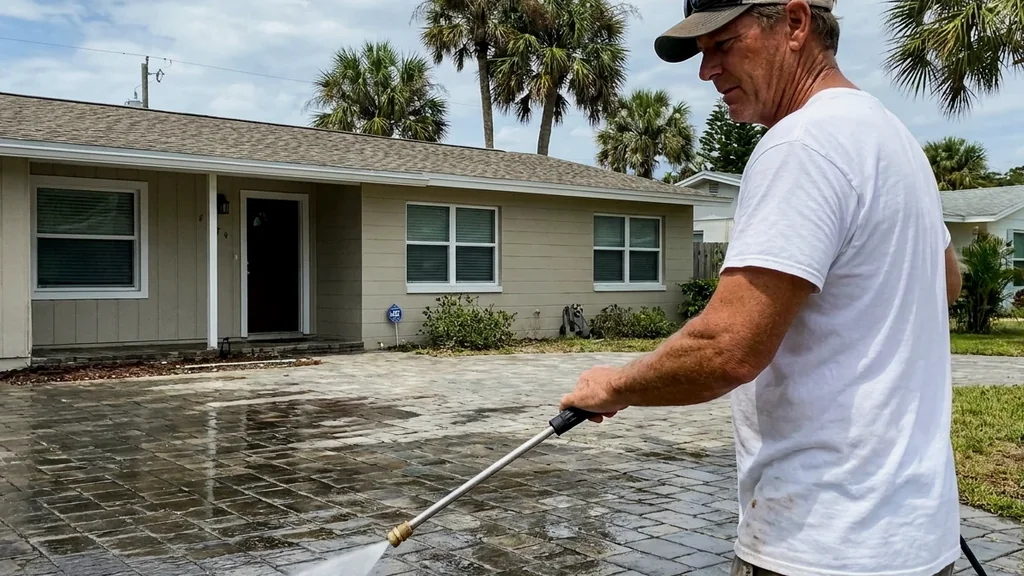
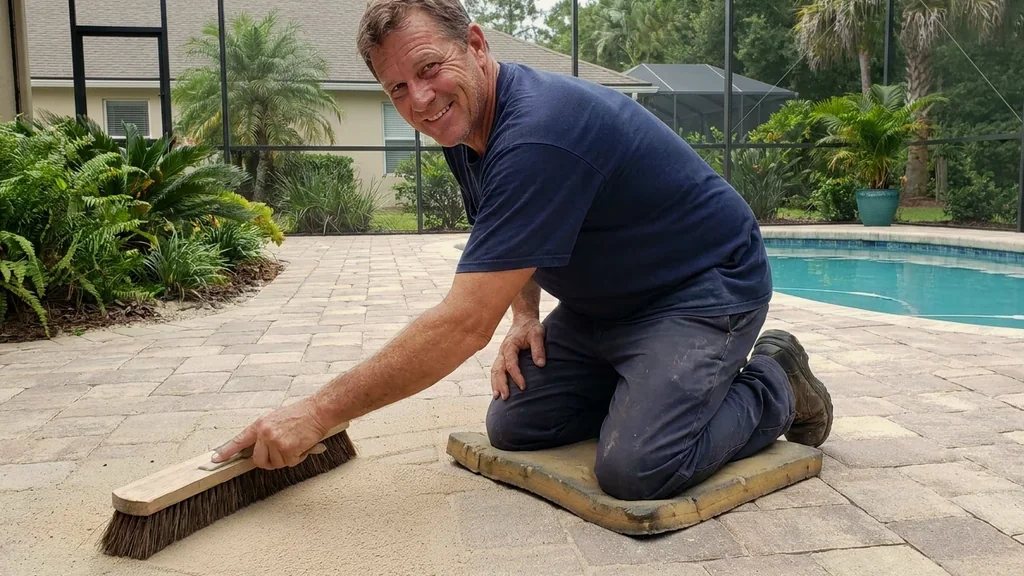
What do sealed pavers look like around Palm Bay?
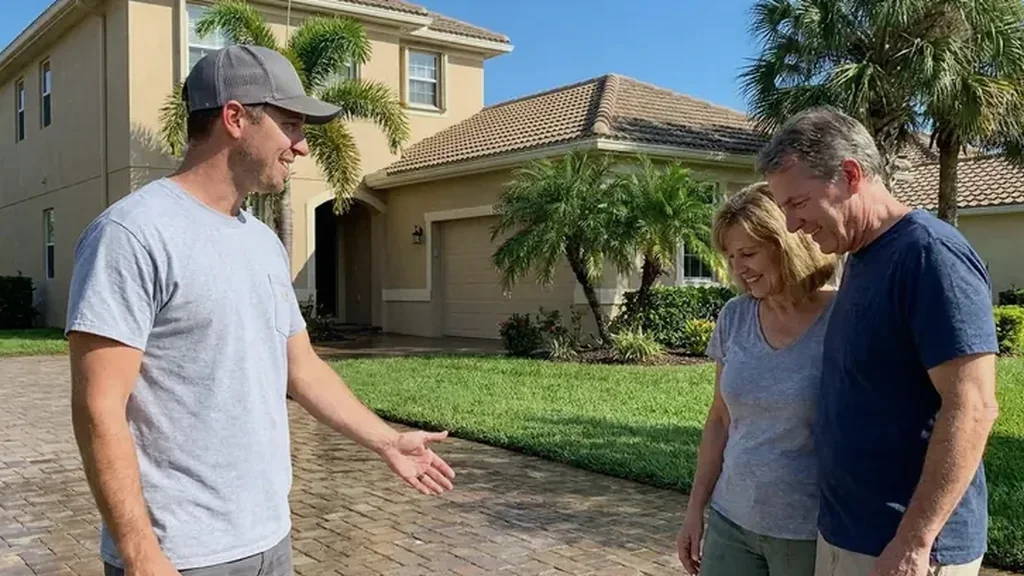
Why local matters in Palm Bay
A contractor who works Palm Bay knows that homes here run from the 1960s forward on big lots. That shapes how much surface there is and what may already be on it. Someone from another county may not ask. To reach a contractor who covers Palm Bay's wide grid, call (321) 455-5098.
Water is the other local piece. The city sits on a drained flat grid, and rain arrives hard in the wet season. A local contractor leaves room in the schedule for it. Use ask for a free estimate to ask how the schedule shifts when a storm rolls through.
Palm Bay is spread out, so a contractor used to the area plans the day around long drives and wide lots. Equipment, water and sand all need to be on hand before the first wash. That kind of planning is easier when the contractor already works nearby. If that sounds right for your home, ask for a free estimate.
How did Palm Bay get its streets and canals?
Palm Bay got most of its grid from General Development Corporation, which bought and platted Port Malabar in 1959. The city was incorporated in January 1960 with 2,808 residents and counted 119,760 in 2020. General Development also built a water plant and many of the homes. If your street is one of those platted blocks, ask for a free estimate.
The canals came earlier, with about 180 miles dug to drain swampland, and General Development later built out the roads. Its roads totaled more than 3,700 miles across nine Florida communities, and Port Malabar Boulevard keeps the old name. Near Turkey Creek, where John Tillman built a wharf in the 1870s, call (321) 455-5098 and name your street.
Frequently Asked Questions
How often should pavers be resealed in Palm Bay?
A Brevard company says to reseal every two to three years, and wider quotes run two to five. A sunny Palm Bay driveway with daily tires sits toward the short end. Looking over the joints each spring shows if sand has gone missing.
How much does it cost to seal pavers in Palm Bay?
Brevard price lists run $1.85 to $4.00 per square foot to clean, sand and seal. Lot size sets the total, and old coats and rust move the rate. A long drive plus a lanai pushes the total up, and a small patio lowers it. Ask for the square footage in writing.
Should driveway pavers be sealed in Palm Bay?
Often yes, because sealing helps hold joint sand and slows weeds and green film. Palm Bay averages 55.55 inches of rain a year, and open joints wash out. A contractor can look at yours and say plainly whether it helps. Find out what upkeep is ahead before you commit.
What do professionals use to seal pavers in Palm Bay?
Professionals use a water-based or a solvent-based sealer, and an old coat decides which one can go on. One Brevard company lists two coats after cleaning, stain treatment and joint sanding. Have the quote name the sealer. When nobody knows what is on the pavers, a test spot comes first.
Is there a downside to sealing pavers in Palm Bay?
The main downsides are upkeep and timing. Sealer wears and has to be renewed, a wet look scuffs faster than matte, and pavers must be dry to take it. A wet stretch can push the date out. Weigh that against the green film and lost sand you would otherwise face.
How long should you stay off pavers after sealing in Palm Bay?
A Brevard company asks owners to wait 72 hours before driving. The coat can face rain after roughly 45 to 60 minutes, and about two days brings a full cure. Foot traffic comes sooner, so ask the contractor about your product. Parking elsewhere and keeping pets inside during that window protects the coat.
When should you seal your pavers in Palm Bay?
September through May has the most suitable conditions, according to one Brevard company. Humidity and rain are lower then, and pavers dry faster. Sealing can happen in other months with planning around the forecast. A dry week in that stretch is the easiest time to book.
Can you put new sealer over old sealer on Palm Bay pavers?
Not in every case, since water-based sealer will not bond to a solvent-based coat. Someone has to identify the old coat before anything new goes on. Many Palm Bay homes are decades old, so an old receipt or product name helps if you can find it. If the sealer type stays unknown, a small test spot can settle it before work starts.
Ready for a Free Estimate in Palm Bay?
Call (321) 455-5098 and tell us about your pavers.
Free, no obligation